Monday, December 17, 2007

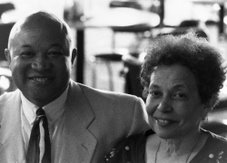
Gracie Annette Brack Williams


Celebration of Life, Tuesday Dec. 18, 2007, 11 am., Bethany Lutheran Church, Forestville, Maryland.

I must have made five hundred trips to Cleveland, Ohio through the decades and ninety percent of the destinations ended up at 841 Linn Drive in Glenville. My vehicles could make the drive without me, they knew the route through those mean streets so well.

I had my own set of keys to the building and occasionally Grandad and Annette would be out when I arrived; no problem. I think they married in 1969; if I recall, they met in Charleston, West Virginia and played cards with Tom and Roberta Watkins, Grandad's long friends.

I often wonder how they stayed so happily together in that tiny, two bedroom apartment? I guess when the price is right, you make do with your surroundings. Grandad was the building superintendent, trading his maintenance and management skills for the rent and didn't dent his meager miner's pension with housing expense.

But the apartment space was so close they had to utilize every square inch to store a lifetime of collectibles. I remember that the closet in the guest room was full of extra suits, dresses, hats, scrapbooks, sewing equipment, the sweeper, extra canned and boxed goods. The drawers of the dresser were crammed with tools, papers and general stuff.

Even though the kitchen wasn't as big as a minute, there was room for a China cabinet for her collectible glassware items, a large fridge, an electric range and a table by the window that would seat three, if forced to. Many of my favorite moments on this Earth were spent in that humble twenty-four square feet of yellow painted wall space.

The foods that were served in the Williams' kitchen had soul. Cornish game hens, ham, capon and an occasional chicken were baked under those glowing elements, as well as packages of dinner rolls and tins biscuits. Mashed potatoes, eggs, potatoes and onions, bacon, green beans, peas and gravies came to life on the top of the range.

I never learned the recipe for the sweet tea that Annette served; nothing I have tasted in this world rivaled its mellow flavor. Now that I know that she has passed on, I'm starting to get teary, for I shall never fill another eight ounce glass with that wonderful blend of Lipton, sugar and lemon.

My tastebubs have memories of moist turkey dressing, slices of white meat and potatoes swimming in perfectly prepared gravy. Green bean with the smoked taste of a salty ham, sweet potatoes and candied yams to died for. Rolls and soft tubs of margarine, dreaded trips to the neighborhood market, because the meal wouldn't be right unless we had cranberry sauce. Wheaties, ripe bananas, toast from a vintage toaster, grape jelly...

In that space at 841 Linn Drive, I would feel no guilt about having, seconds and just a dab of thirds. For me, soul foods delivered there were like nowhere else. Tony Bennett's heart is in San Francisco, but God knows that mine is in Glenville in my grandpeople's greasy kitchen.

I remember the summer of 2003 was Bob and Annette's last on Linn Drive. The building was not the same strong building as when Grandad inherited its upkeep in 1969. I had gone up for a Cleveland Rockers basketball game in August and when I pulled into the parking lot on Prospect Street, the lot attended told me that the game had been canceled because the power in the city had gone down.

I made a risky beeline (no traffic signals) to Linn Drive, because that August day was stiflingly hot. When I arrived, it took two sweltering hours to talk the old folks into packing an overnight bag and coming south to Columbus or at least to a local motel in the suburbs, where there might be electricity and air conditioning.

We, and the thousands of other victims of a power outage that blanketed the Midwest, East Coast and parts of Canada, drove for three hours, before we got to the nearest available motel in Ashland, Ohio, eighty miles south of Cleveland. I got two rooms and we were comforted. We got up the next morning and power had been restored, so we drove back to Glenville.

With grateful heart, I am thankful for the years that Grandad and Annette comforted and loved each other and the many miles that they traveled safely on the highways visiting friends, attending school reunions, church functions, attending funerals and family holidays. Their favorites were Memorial Day, to decorate the graves of her loved ones in West Virginia, the Gary District High School Reunions and the Pig Roast and Family Days in Plain City, Ohio. They would gather up a carload of the Cleveland Family and strike out for a long day trip to the country and the fellowship of our extended Frazier Family.

When they stopped coming to the Pig Roast during the 2001 Labor Day, I knew that Father Time had caught up with them. But Bob and Annette Williams sure gave the Old Guy a great run, staying active well into their eighties. Perhaps their time together in heaven be full of friends, card games, soulful meals and nice cars. I hope so.

Bright moments from your loving grandboy,

Arnett

Tuesday, October 23, 2007

Margaret Ann Haney, 1938-2007


"Arnett,
Please accept my sympathy for the lost of your mentor. On June 4, I lost one of my mentors and good friend, Truman Greenwood. He had turned ninety in January. My amount of history about the American Native Indian was increased by him. I learned so much about life and how to treat people from him. I really miss Truman but he was a Christian so I hope to meet him later.

Margaret Haney"

It is time to memorialize my great friend and educator Margaret Ann (Marge) Haney, who made the transition to her heavenly pneuma, Monday, October 16, 2007, 9 pm., while the rest of us were watching Cleveland and Boston's playoff baseball war. Ralph Smucker saw her during lunch earlier that day at Panera Bread on Avery Road and said she had her usual healthy glow and infectious joy.

Her daughter, Stephanie Gerckens , said she got a call from her in the early evening that she was ill and Stephanie rushed over to the family house on Rings Road. She said Marge was pale, out of breath and told her she thought she was having a heart attack. The squad arrived and she was conscious and alert enough to answer medical questions about allergies and to tell Stephanie she loved her, but when the Washington Township Squad arrived at Riverside Methodist Hospital, she became completely pale and went into cardiac arrest.

Stephanie witnessed the hospital's huge emergency trauma team work aggressively to try to restore her heartbeat, but the tremendous efforts weren't successful and Marge was declared dead at 9 pm. I witnessed the Riverside team perform those same acts on my father, George Howard, in January, 1994, with the same results. We deliver our loved one's into God's Hands.

"Always read stuff that will make you look good if you die in the middle of it.
Margaret Haney"


Marge Haney and I met in September, 1960, at Plain City Elementary School, where according to Ralph, she was a twenty-year-old, first-year teacher and Ralph and I were ten-year-old, first-year fifth graders. The Yankees were in the 1960 World Series against the Pirates and Bill Mazeroski hit a homer in the bottom of the ninth to win the for Pittsburgh. My heart was broken, because Elston Howard, the Yankees catcher, was my fantasy uncle and Mrs. Haney put up with my imagination that he was my relative.

1960 was a crossroads year for me because it was the year I began formal music training in piano and trumpet and three educators, starting their first seasons in Plain City schools that fall, Shirley Cox, Ray Starrett and Marge Haney. They all got behind me and gave me a big shove. Thanks to them, my life has been always fast forward.

Marge spent her life as an educator in the Plain City Schools and a church person at St. John's Lutheran in her beloved Amlin, Ohio, a tiny, traditional farming community in Northwest Franklin County. Beginning in 1988, I would come back annually into the Plain City schools to do concert and she would be around to hug me and share her pride that her boy had grown up to be a noted musician and community person.

"Thanks, I appreciate your kindness. Have a good time when you go to Florida.
Margaret Haney"


In 1996, I saw her and best friend/cousin, Betty Patch, at the Dublin Metro Fitness Club where they exercised. When she told me of her upcoming retirement as the curriculum supervisor for Jonathan Alder Schools, I told her that her retirement gift from me was a trip to Jamaica on my fall tour. So happy she was when we landed with a large group of friends and I was able to show her my second home, Negril, and take her to White Hall School. I introduced her to the school's principal, Mrs. Murray, and the two educators bonded.

Marge went on the next trip to Jamaica in 1998 and in 2002, we went to New Orleans, where I introduced her to my favorite city and the New Orleans Jazz and Heritage Festival. She loved to travel and sent me cards from some of her other worldwide excursions.

"Birthdays are good for you. The more you have, the longer you live.
Margaret Haney"


Over the past couple of years we have shared together my greatest passion, besides music, women's college basketball. In January, 2006, we met over at Ohio State's Value City Arena and watched our Buckeyes fight a furious war against Oklahoma, with the Buckeye's turning the tables and winning the the final minute. That night she turned into an active fan and this past January we got together to potluck with Bill and Kathy Dancey to watch the Buckeyes and Sooners game broadcast from Norman, Oklahoma, with the same results; the Sooners played their hearts out, but the Buckeyes took home the win.

I hope she followed my 2007 Fortieth Anniversary Tour through the e-mails that I sent as I played all over Ohio and I trust that her spirit was with us as Bill Dancey and I traveled to Detroit to watch the professional women's teams play in the summer league.

I speak for thousands of her students and even more of her friends and family; WHAT A BLESSING IT IS TO HAVE MARGARET ANN HANEY IN MY LIFE!

"I am glad that you honor your friends. M. Haney"

Thursday, September 20, 2007

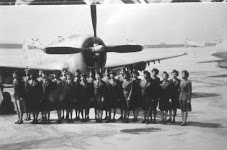
Tuskegee Airmen at Lockbourne Air Base, 1946-49

During the winter 2007 I got a call from Connie Tracy, public relations administrator for the Columbus Regional Airport Authority (CRAA). Since I am weak for Connie, I let her take me to lunch at the Concourse Hotel and over a turkey rueben sandwich, she conned me into doing months of work for no pay, no expenses and I would have to pay for my own supplies. What a deal; how could I say no?

The request that Connie had was to document a history of the legendary Tuskegee Airmen during the three years that the Black airmen were stationed at Lockbourne Air Base, beginning in May, 1946. I had done a previous project with Connie and CRAA to commemorate the seventy-fifth anniversary of Port Columbus International Airport in 2004 and she latched onto my passion for aviation history.

This was an invitation that was easy to get excited about, since I had started to accumulate bits of the Lockbourne Air Base saga from musicians and retirees that I had met, who had shared with me first hand stories of their journeys to Columbus from the South to become a part of the postwar Air Force. Those Tuskegee/Lockbourne alumni included trombonist Art Baskerville, flight controller Arthur Boudreaux, Ohio Chapter Tuskegee President Bob Peebles and bomber pilot Herdon "Don" Cummings.
I had captured, some years, before a videotape that was a PBS broadcast featuring Ivory (Ike) Mitchell and Willie Ruff, the musical Mitchell-Ruff Duo, that had their beginnings as very young airmen in 1947. This video, on mentoring, told the story of a young airmen being taught music by an older airman and it included photographs and films, with commentary, to illustrate what Lockbourne was like during the late 1940s, “A Sepia Mecca unto itself rising on the Southern Ohio landscape.”

I began my travels into this time machine by calling on my fellow historians Jeff Darbee and Nancy Recchie, husband and wife owners of Benjamin D. Rickey and Company, a consulting firm on historic preservation. They had vacationed in 2001 at Maxwell Air Force Base, in Alabama and spent their time searching the archives of the Air Force Historical Research Agency for documents, photographs and squadron reports of the Black airmen during the heyday of racially segregated Army Air Corps, 1941 to 1949,

After months of juggling our schedules, I met with the Darbee-Recchie Family and they produced the box of pages, pictures, discs and slides that had sat in their basement since a February, 2002 Columbus Historical Society presentation that Jeff gave to show slides and introduce the under-publicized story. I looked through the box, separating pages from the images, hoping that I would be trusted to take the images with me to scan and then use imaging software to enhance.

They did allow me to take the box of media home with me, but it sat for the summer, untouched because of my fortieth anniversary tour and big obligations to the 2007 Lancaster Festival. My calendar opened up in early August and I got to the work of scanning, enhancing, printing and sorting over three hundred images, in hopes of producing a book to be introduced at the 2007 Air Show, Gathering of Mustangs and Legends, September 27-30, 2007 at Lockbourne/Rickenbacker Air Base.


I also found time to get some days in at the Columbus Main Library, where the Microfiche Department had reels containing the Ohio State News, the publication that featured news of Black Ohioans during the war years. In three longs days I was able to look at Lockbourne news, from the speculation in January, 1946 that Lockbourne was going become a Negro base full of “troublemakers” to the “death march” that greeted a winning gunnery team when they returned from an Air Force competition in May, 1949. The in-between years had news about Col. Benjamin O. Davis, Jr. and his "tight ship”, visits from military dignitaries, staff promotions, weddings, track meets, radio model contests, air shows, Army Day parades, football games, visiting bands, special holiday concerts in local clubs, bridge games, the NCO Club, the debut of the Operation Happiness Show at Memorial Hall, arrests, auto and airplane accidents and airmen’s last rites.

I began printing pictures and gathering caption information to add color to the sixty year old images, many of which were shot by base photographer Sgt. Bernard Hale. I entered names into search engines, used magnifying lenses to get info from the prints and the slides that were photographs of squadron reports with pictures stapled to them.

Aside from the well-documented hero and base commander, Col. Davis, a most fascinating personality unearthed from the Darbee’s photo treasures was Lt. Willard W. "Chip” Savoy, the base public relations officer from Washington, D.C. The database search produced a book title under Lt. Savoy’s authorship, Alien Land; a 1949 publication about a man of light complexion who is pressured by the two racial identities that he exists in. I found an original copy on Amazon.com and it arrived in my mailbox in suprisingly good condition for being printed fifty-eight years previous. I also made contact with his daughter, Dr. Lauret Savoy, an educator at Mt. Holyoke College in South Hadley, Massachusetts.

Another interesting Lockbourne officer was Major Vance H. Marchbanks, Lockbourne Army Air Base Surgeon, who was well loved by his fellow airmen because of his skill at keeping them healthy. Later in his military career he played an important role at National Aeronautics and Space Administration (NASA) in the 1960s. When Marine Lt. John Glenn circled the earth in the Friendship 7 capsule, becoming the first American to orbit the earth in space, Marchbanks monitored Glenn’s respiration, pulse, temperature and heartbeat from a base in Kano, Nigeria. Colonel Marchbanks became a pioneer in the field of aeromedical research and later, aerospace medicine.

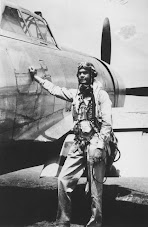
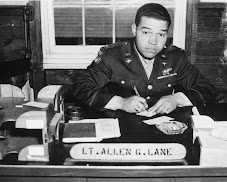
Then there was the beautiful photo of Lt Allen G. Lane, adjutant of the 100th Fighter Squadron, from Demopolis, Alabama, forced to bail out of his plane set afire by flak bursts over Italy during January, 1944. In early 1949, while returning to Lockbourne from a cross country training flight, his P-47 fighter's engine failed and he died on impact. I found the news story that documented his accident and the young family that was left to grieve him as a hero.

I finished the last of eighty-five display prints on a quality, archival paper on September, 18, 2007. The next day I went into the dry mounting shop with Bruce and Jan Warner, fellow members of the Columbus Historical Society, and in four hours we prepared the prints for exhibition. The exhibition will be at the Gathering of Mustangs and Legends 2007, a four day aviation show, September 27-30th, that is a reunion of one hundred P-51 fighter planes and the legendary men and women pilots that flew them to victory during World War Two.

So thanks to Connie Tracy’s request to take an all-expenses unpaid trip through time, I have delighted in renewing the lost legacy of Lockbourne Air Base, the Black commanding officer and his Air Force. Col. Davis’ ship was run so tight that it put wheels in motion to integrate the U.S. Air Force, the U.S. Military and eventually alert American life to the talents of the well-trained Tuskegee Airmen and America’s people of color.

Wednesday, September 12, 2007

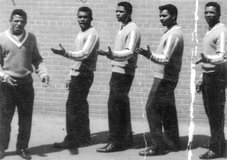
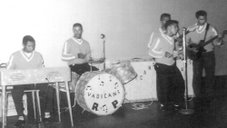
The Soul Superbs, 1973

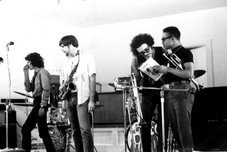
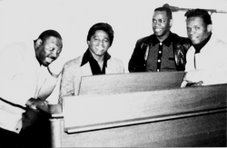
Earnest “Pepper” Reed, a phenomenal guitarist, and I had been rehearsing with some band in the spring of 1973, when he suggested that we rehearse with the Soul Superbs. They were a band based in Columbus’ Southfield neighborhood and in June, 1973, all of the players were just graduates of Marion Franklin High School.
We rehearsed at saxophonist Chris Powell’s home; he and drummer Anthony Ludaway shared the leadership of the band. Other members included Larry Farris, bass, Bobby Payton, guitar and Frankie Justice, vocals, along with Billy Taylor who was the road manager.
After a few rehearsals, the band was preparing for a road trip to Rock Island, Illinois to perform for a week at Woody’s Magic Room. Woody was the Black entrepreneur in the famed railroad town and his business complex included a restaurant, liquor carryout and lounge. We drove eight or more hours across Ohio, Indiana and Illinois to get to the Quad Cities of Moline, East Moline, Rock Island and Davenport, Iowa.
In 1973, bands were working six nights a week in night clubs and hotel lounges. Our material was current rhythm and blues, with a heavy accent on Parliment-Funkadelic music from the album America Eats Its Young. After a week in Rock Island, we journeyed in our two cars and U-Hall trailer to Grand Rapids, Michigan to play at the Golden Glow, a nightclub in the Black section of town. Instead of staying in a Motel Six (when the price was six dollars nightly), the club owner rented us a house that he owned for one hundred twenty-five dollars for the week.
One of my fondest memories was meeting Laurie Smith, a bartender at the Glow and we became companions for the week that the Soul Superbs played there. She was Hispanic and after the club date she would take me to the Acapulco Cafe and we would get heaping plates of rich Mexican cuisine. Laurie was also quite a beauty.
I traveled with the Superbs from June to January, 1974 and we made gigs in Virginia, West Virginia, Kentucky, Indiana, Wisconsin, Iowa and Michigan. The highlights were Haywood’s Hotel in White Sulphur Springs, West Virginia, Evansville, Indiana, Des Moines, Iowa and Bluefield, West Virginia.
There were some very low times also; getting stiffed for our weekend pay in Des Moines and having to stay in a flea bag hotel, driving from Beloit, Wisconsin to Beckley, West Virginia, getting slowed down by fog on the West Virginia Turnpike and missing the gig. The road life was full of broken vehicles, greasy food, drinking, drugs and sexually transmitted diseases. However the music business can truly be a university with the lessons that are learned as a young musician travels from state to state.

Saturday, August 18, 2007

Westerville Mark Twain Rock and Roll Summer Camp

Monday, August 13th, Day One; We met at 9 am. in Mr. Harvey’s music room, at Mark Twain Elementary School in Westerville, Ohio, introduced ourselves and I sang a song that I wrote with Lancaster, Ohio kids in 2004 called A Kid Beyond Compare, which contains a line, “Right out of my mouth flies a big, fat, fish story, smellin’ up there air.”
On the chalk board I wrote the line, “I woke up this morning with a song in my head.” I passed out rhyming dictionaries and instructed them to find the word “bed.” We worked an hour and finished two verses, before Dr. Scott Ebbrecht arrived with snacks and water.
After snacks we pulled percussion instruments from the shelf and began doodling, before I organized a call and response exercise that gave everyone to have an opportunity to be leader. Afterwards, I solicited song ideas and the subject of the circus came to the forefront. Several of the kids had seen Cirque du Soliel and we consulted our rhyming dictionaries while we developed The Circus, with sixteen lines and a repeated chorus.
Tuesday, August 14th, Day Two; I brought my recording equipment and explained to them how a professional musician’s discipline works when they are recording, respecting the microphones and the need for quiet to engineer a good recording. We recorded the chorus to With a Song in My Head, then finished three additional verses. After the snack break we recorded a tambourine call and response, with the students imitating my beats with their favorite percussion instruments.
I then had them rehearse singng the song about the circus, before I decided that they weren’t responding well to the melody. I recorded the class singing the chorus several times. Afterwards, I recorded Aidan Iannarino playing his wooden flute, before giving each person a chance to solo on percussin instruments before the microphones. A photographer from the Westerville News and Public Opinion came in to shoots for forty excellent images.
Wednesday, August 15th, Day Three; When everyone arrived and we warmed our voices and bodies up, I made them a gift of Hohner plastic kazoos and gave them instruction as to how the instrument made music. It is a challenge to teach a kazoo, an instrument whose best noise is a result of a nasal hum; kids naturally want to blow.
After they got the hang and before the cheap instruments were unusable, the kazoo choir recorded With a Song in My Head and The Circus. Since the music store only had seven kazoos for my eight students, I had to get two plastic, siren whistles. Austin Ebbrecht took a liking to the whistle and offered a unique “beat box” way of making the toy musical. I recorded him rapping with his new whistle, while several of us clapped along and the goods are entitled Mouth Noise 2. He also played a solo piano piece, reminding us of the native Indian culture.
In one of my previous kids recording workshops I had the student record unique body sounds, but this group couldn’t distinguish itself with “arm blats” or hand whistles. However, Aiden, moved to the microphone with distinctive chirp that I thought warranted saving for posterity (Mouth Noise 1).
With a half hour remaining in our session, I wrote the title, Mark Twain Rock and Roll Summer Camp, on the blackboard and passed out rhyming books to solicit help with a song to immortalize Dr. Ebbrecht’s idea of the first Westerville music camp for elementary students. The song came together before we adjourned for the day.
At my home, I work eight straight hours to polish and paste the recording snippets of voices, kazoos, melodic and percussive instruments into eight acceptably finished products. I e-mailed two demo recordings to Dr. Ebbrecht and he responded, “Arnett, once again you impress me! Wonderful stuff ... my twins really enjoyed listening to it with big smiles on their faces. You are sure are doing great stuff with our kids! Can't wait to share with the
principals in the district.”
Thursday, August 16th, Day Four; I assembled playback equipment and introduced the students to their new recordings. We analyzed each of the eight recordings and got opinions about improvement and after an hour and a half, I polled each student and all but two gave the overall project two thumbs up; one student said he needed three thumbs and the other is excited about the camp, but is a late bloomer with his appreciation skills.
I gave the kids templates to design their own disc labels, and after the prototypes were drawn and colored satisfactorily, I gave them label paper to execute their own designs.
Friday, August 17th, Day Five; The assembly process begins; discs are burned, labels are carefully applied, sleeves and j cards are printed, cut and folded. Each student gets to complete the product that started with a blank page and a rhyming dictionary Monday morning, as I guide hands to applying the labels to the discs and jewel boxes and inserting the labels. We finish with a group autograph session and photo.
Hopefully the next generation of musical artists will be launched from this intensive experienced; I was as a young musician being mentored by teachers in the 1960s. Thanks to Dr, Scott Ebbrecht and the families who have made an investment in their children’s growth as musicians and artists.

Arnett Howard, musician, educator
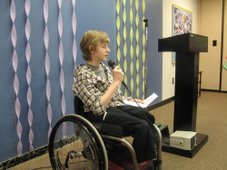
Rock and Roll campers: Aidan Iannarino, Mia Iannarino, Ava Iannarino, Joe Bugenstein, Jack Funderburg, Tristan Rice, Austin Ebbrecht, Nick Fratianne

Monday, May 7, 2007

Arnett's Capital University Years, 1968-70

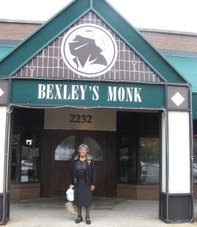
Bexley, Ohio’s Capital University, in the late sixties, was a campus about to make a major transition, coinciding with the final year of Dr. Harold Yochum’s presidency. I became a freshman in the fall of 1968 and one of the campus traditions of this small Lutheran college, founded in 1876, included mandatory chapel attendance early on Monday and Wednesday mornings.
As I look back on those days, nearly forty years ago, I can see the blessing of mandatory chapel services; it brought the entire student and faculty body together in a place where you could meet regularly and become friends with your fellow students. Very soon in the year, a group of us identified our common interests; sex, drugs, rock and roll, as well as protest against the rapidly unpopular war in Southeast Asia.
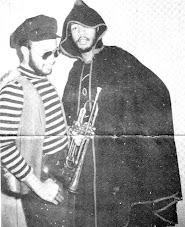
Our coed fraternity became known as The Freaks. We had free thinking faculty members to whom we were drawn to help cultivate our countercultural interests. The soundtrack to our social experiments including groups like Frank Zappa and the Mothers of Invention, Joe Cocker, Blind Faith, John Mayall’s Blues Band, Jimi Hendrix, Janice Joplin, Canned Heat and of course, The Beatles during their final days.
The university seemed to embrace our student activism by bringing in controversial speakers like Madelyn Murray O’Hair, the famed atheist, freeing classes on the days of the national antiwar moratoriums, allowing the first campus parties with alcoholic beverages and coed dorm visitations. One of the biggest surprises in official university blessings was when our Freak fraternity was given a university house to serve as a coffee house, complete with an upright piano, a refrigerator and four bedrooms.
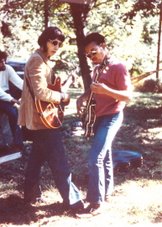
I remember visiting the coffee house one Friday evening and seeing a blazing guitarist that I had never notice on campus before. Don Chakeres was an Upper Arlington native, majoring in chemistry and he had a guitar style that was later to be popularized by jazz guitarist Al Dimeola. We found common ground playing the blues and Beatles hits and when the new school year started in 1969, we became inseparable.
I remember Don’s brother, Dave, was a bassist, his pal, Frank Pierce was an excellent drummer and we worked up an act with David Papke, who was abandoning his Simon and Garfunkel repertoire for original songs. We played constantly in rotating ensembles of different sizes, personnel and soon jammin’ became more important to me than maintaining my track in the conservatory. By the end of my fourth semester at Capital, my grades were in such a spiral that I was called before Dean Roland Sedgewich’s academic review board, where I offered my resignation, rather than being dismissed as a student.
It broke my father’s confidence in me when I admitted that I had quit as a student and I got a job working as a nurses aide at Columbus State Institute, a state mental institution. I worked the overnight shift, would come back to the Capital campus, sleep in Dave Papke’s room, audit some classes and get together with the gang to make more rockin' music.
Don Chakeres married Linda Miller in June, 1970 and I played Bye, Bye Blackbird at their wedding ceremony at First Community Church. Their wedding reception at the OSU Faculty Club was one of the most memorable parties of my first twenty years; the Greeks, the Italians and the Hippies letting it all hang out in celebration.

Monday, April 30, 2007

Arnett's First Musical Days, 1960

In the early 1960’s, before interstate highways were built, Robert Williams, my grandad and best friend, and I often motored U.S. Route Forty-Two north to visit his Aunt Millie Bookman in Cleveland. The only time that we came close to meeting our maker (and it was very close), I missed reporting a stop sign as we intersected Ohio Route Thirty-Seven in Delaware. A gasoline tanker bounced to a sudden stop to avoid broadsiding us; close, but no smoke.
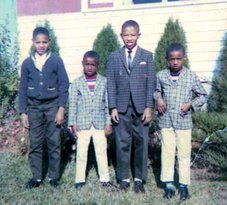
During our visits to Northeast Ohio, we included a stop in Twinsburg Heights, a rural community where Uncle Al Turner, my grandad’s brother-in-law, was raising his children, Robert, Fannie, Gail and Carol Ann, following his wife, Willie Mae’s death. On the way home from one trip, Uncle Al put a field drum and a jazz guitar into the Plymouth for my brother and I to play, since his kids didn’t seem to have musical interests.
These instruments became among the first in the Howard Brother’s collection, to be joined by an upright piano, a bass drum, xylophone, bugle and a host of musical noise making toys. The bulk of the instruments came from the attic of Cornetta Palmer, a church woman whose husband had been a drummer during the jazz age of the 1920’s and ‘30’s.
The bugle was a gift from my neighbor and big brother, Billy Leftwich. He used to blow bugle calls from his porch during the summer of 1960 and that sound burned so deep that I eventually begged Billy for the bugle and with his guidance, I taught myself the calls.
I got my first formal lessons from our pastor’s wife, Mary Liggins, who taught Gerald and I introductory piano that summer of 1960. It took a year to get through Teaching Little Fingers To Play and while we were learning, our mother was teaching her fingers too. We had just started book two when Mom ceased our lessons, apparently frustrated that our exploding passion for little league baseball was destroying her investment in our training.
But my brothers and I kept the ear shattering racket going in the basement, playing along with her tape recorder, listening to WVKO Radio, singing, learning lyrics and harmony, absorbing everything musical. I began to be noticed in school music classes; I raised my hand when my teacher, Shirley Cox, asked, “Whose got that deep voice out there?”
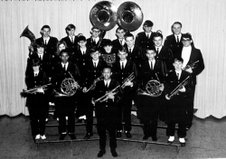
Ray Starrett began instructing instrumental music for Plain City Schools in the fall of 1960 and I was eager to be his fifth grade trumpet student at aged ten. He was confident enough in my progress by aged twelve to allow me to switch from trumpet to the baritone horn; an instrument that I heard solo on a boogie piece called Time Out For A Jam Session. I had to switch back to trumpet in the eighth grade because he needed a strong, first chair, lead trumpeter for the Plain City Junior High School Band. That year I wrote my first chart and was featured in the spring concert on my arrangement of the hit Alley Cat.
When I went to Jonathan Alder High School in the fall of 1964, a lack of seniority forced me to sit with the third trumpets for the football and concert season. But early in my sophomore year, I was apprenticing with the upperclassmen in the lead section, playing selections from Broadway shows like South Pacific, overtures to operas, concert band repertoire, dixieland medleys and in the trio of trumpets on Bugler’s Holiday.
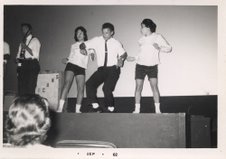
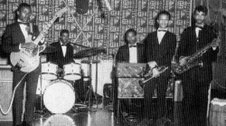
The kids in our Frazier Estates neighborhood had formed a band by 1965 and I was leading with my trumpet and voice. The first group, The Soul Internationals, included my brother Gerald on guitar, Doug Yoder on bass, Richard Madry on tenor saxophone, Chuck and Debbie Davidson on drums and piano. We rehearsed James Brown songs, The Four Tops and Temptations, Otis Redding, etc. Uncle Bill Chapman, an announcer on WVKO, used his connections to get us mentions on the radio and appearances at teen dances with the Belmont Youth Club.
In the early summer of 1967, I was appearing on stage at Columbus’ Veteran’s Memorial Auditorium as a screaming teen in Bye, Bye Birdie, with Gene “Bat Masterson” Barry, singer Arlene Fontana, comedian Totie Fields and Ted “Lurch” Cassidy. Fellow teen Andy Robinson and I were the biggest hams of the entire company, singing and playing the Righteous Brothers at every party or rehearsal break. I cherished that entrance into show business; becoming an adopted son to Totie Fields and George Johnson, her husband/music director. She died two summers later, losing her inspiring bout with cancer.
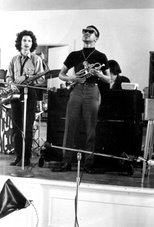
I became a paid, professional musician, July 21, 1967, seven weeks before my seventeenth birthday.