Showing posts with label music. Show all posts

Sunday, June 1, 2008

The 2008 Westerville Music Project


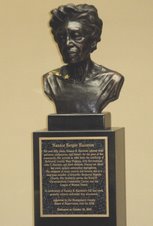
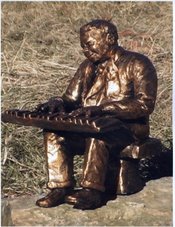
The 2008 Westerville Music Project was something I conceived during the spring, as a tribute to the Westerville Sesquicentennial and the city’s legacy as the home of Benjamin R. Hanby. The project builds on the 2007 Westerville Schools Leadership Summit and the Mark Twain Elementary Music Summer Camp, that was administered by Dr. Scott Ebbrecht, principal.

The objective of the 2008 Westerville Music Project was to write and record as many songs as possible with Westerville school students and prepare a series of compact discs and a book to place in the community’s sesquicentennial time capsule. The project involved students in the multidisciplines of song writing, performing, recording techniques, as well as the history and music of Benjamin R. Hanby, Westerville’s most noted historical figure, who was an educator, as well as a composer.

Beth Weinhart, of the Westerville Public Library, expressed an interest in providing Hanby music resource materials from library and Otterbein University archives. Mary Bigham, a volunteer with the Hanby House, also offered to duplicate and provide Hanby scores from her private collection of songs that Ben Hanby used to teach students.

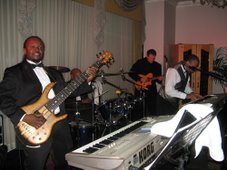
I guess Ben Hanby and I do the same thing, only separated by one hundred-fifty years. I love history, music, kids and I have been having the most wonderful experiences with Westerville students since Bob Abbott brought me and my Creole Funk band to John Greenleaf Whittier Elementary in 1987.

Ben Hanby is said to have written more than eighty songs in his short life (1833-67); most devoted to educating his students. As time passes and the population Westerville community grows with newly arriving families, his name is still present on a school building and the historical Hanby home site, but his life work has been forgotten in the rush of our modern life.

I hope this effort to bridge the one hundred fifty years since Ben made his songs will carry his legacy at least another fifty years. Who knows what young Westerville composer and songwriter might be in the hearts of music lovers in 2058 when Westerville celebrates its bicentennial, opens the Ben Hanby Songs book and listens to these recordings.

I have performed countless events in the Westerville communities; the Music and Arts Festival, Alum Creek Park, Heritage Park, Otterbein College, Central College Presbyterian Church, the Library, the Scoreboard Restaurant and every school building in the district, weddings and parties for local families.

Because of the Westerville Music Project, Benjamin R. Hanby is in the hearts of Westerville students today!

Saturday, May 17, 2008

Kidding Around II Released


I do a lot of very cool things in life, however, composing songs with kids is a big motivator. Knowing that before the morning is over there will fun new songs in the world, makes me get up at six in the morning and have a smile, as I carefully rush down the highway to schools in Central Ohio.
My first recording collaboration with youngsters occurred in 1997, Arnet Howed’s Cruel Funk Band, Kidding Around. My second was with students in Grandview Heights, Ohio, I’m a Walkin’, Takin’ Pair of Pants, in 2003.
The lastest collection of rhythms, rhymes, melodies and body noises, Kidding Around II, comes from projects that began in 2006 with the Lancaster Teens C D Project and Schultz School Jazz. The main 2007 event was the Mark Twain Elementary Rock and Roll Summer Camp and 2008 has found me writing songs with imaginative kids at Mark Twain, Pointview and Annehurst Schools in Westerville, Ohio, as well as Pickerington Elementary, in Pickerington, OH.
I was sixteen when I made my first recordings and I hope my fellow musicians on this disc, from aged five to seventeen, can boast (like I continue to do) about how young they were when they made their first appearance in front of the microphones. Music is a love force; long may you sing your songs!

Monday, May 7, 2007

Arnett's Capital University Years, 1968-70

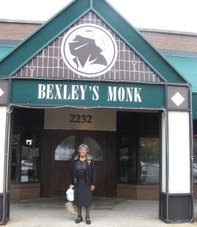
Bexley, Ohio’s Capital University, in the late sixties, was a campus about to make a major transition, coinciding with the final year of Dr. Harold Yochum’s presidency. I became a freshman in the fall of 1968 and one of the campus traditions of this small Lutheran college, founded in 1876, included mandatory chapel attendance early on Monday and Wednesday mornings.
As I look back on those days, nearly forty years ago, I can see the blessing of mandatory chapel services; it brought the entire student and faculty body together in a place where you could meet regularly and become friends with your fellow students. Very soon in the year, a group of us identified our common interests; sex, drugs, rock and roll, as well as protest against the rapidly unpopular war in Southeast Asia.
Our coed fraternity became known as The Freaks. We had free thinking faculty members to whom we were drawn to help cultivate our countercultural interests. The soundtrack to our social experiments including groups like Frank Zappa and the Mothers of Invention, Joe Cocker, Blind Faith, John Mayall’s Blues Band, Jimi Hendrix, Janice Joplin, Canned Heat and of course, The Beatles during their final days.
The university seemed to embrace our student activism by bringing in controversial speakers like Madelyn Murray O’Hair, the famed atheist, freeing classes on the days of the national antiwar moratoriums, allowing the first campus parties with alcoholic beverages and coed dorm visitations. One of the biggest surprises in official university blessings was when our Freak fraternity was given a university house to serve as a coffee house, complete with an upright piano, a refrigerator and four bedrooms.
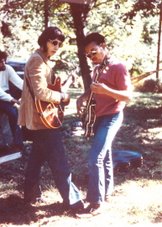
I remember visiting the coffee house one Friday evening and seeing a blazing guitarist that I had never notice on campus before. Don Chakeres was an Upper Arlington native, majoring in chemistry and he had a guitar style that was later to be popularized by jazz guitarist Al Dimeola. We found common ground playing the blues and Beatles hits and when the new school year started in 1969, we became inseparable.
I remember Don’s brother, Dave, was a bassist, his pal, Frank Pierce was an excellent drummer and we worked up an act with David Papke, who was abandoning his Simon and Garfunkel repertoire for original songs. We played constantly in rotating ensembles of different sizes, personnel and soon jammin’ became more important to me than maintaining my track in the conservatory. By the end of my fourth semester at Capital, my grades were in such a spiral that I was called before Dean Roland Sedgewich’s academic review board, where I offered my resignation, rather than being dismissed as a student.
It broke my father’s confidence in me when I admitted that I had quit as a student and I got a job working as a nurses aide at Columbus State Institute, a state mental institution. I worked the overnight shift, would come back to the Capital campus, sleep in Dave Papke’s room, audit some classes and get together with the gang to make more rockin' music.
Don Chakeres married Linda Miller in June, 1970 and I played Bye, Bye Blackbird at their wedding ceremony at First Community Church. Their wedding reception at the OSU Faculty Club was one of the most memorable parties of my first twenty years; the Greeks, the Italians and the Hippies letting it all hang out in celebration.

Monday, April 30, 2007

Arnett's First Musical Days, 1960

In the early 1960’s, before interstate highways were built, Robert Williams, my grandad and best friend, and I often motored U.S. Route Forty-Two north to visit his Aunt Millie Bookman in Cleveland. The only time that we came close to meeting our maker (and it was very close), I missed reporting a stop sign as we intersected Ohio Route Thirty-Seven in Delaware. A gasoline tanker bounced to a sudden stop to avoid broadsiding us; close, but no smoke.
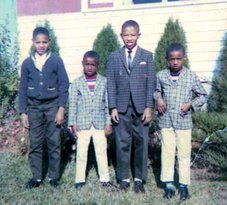
During our visits to Northeast Ohio, we included a stop in Twinsburg Heights, a rural community where Uncle Al Turner, my grandad’s brother-in-law, was raising his children, Robert, Fannie, Gail and Carol Ann, following his wife, Willie Mae’s death. On the way home from one trip, Uncle Al put a field drum and a jazz guitar into the Plymouth for my brother and I to play, since his kids didn’t seem to have musical interests.
These instruments became among the first in the Howard Brother’s collection, to be joined by an upright piano, a bass drum, xylophone, bugle and a host of musical noise making toys. The bulk of the instruments came from the attic of Cornetta Palmer, a church woman whose husband had been a drummer during the jazz age of the 1920’s and ‘30’s.
The bugle was a gift from my neighbor and big brother, Billy Leftwich. He used to blow bugle calls from his porch during the summer of 1960 and that sound burned so deep that I eventually begged Billy for the bugle and with his guidance, I taught myself the calls.
I got my first formal lessons from our pastor’s wife, Mary Liggins, who taught Gerald and I introductory piano that summer of 1960. It took a year to get through Teaching Little Fingers To Play and while we were learning, our mother was teaching her fingers too. We had just started book two when Mom ceased our lessons, apparently frustrated that our exploding passion for little league baseball was destroying her investment in our training.
But my brothers and I kept the ear shattering racket going in the basement, playing along with her tape recorder, listening to WVKO Radio, singing, learning lyrics and harmony, absorbing everything musical. I began to be noticed in school music classes; I raised my hand when my teacher, Shirley Cox, asked, “Whose got that deep voice out there?”
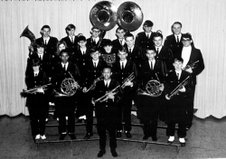
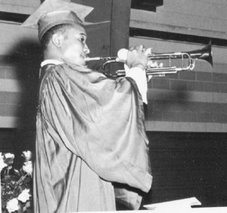
Ray Starrett began instructing instrumental music for Plain City Schools in the fall of 1960 and I was eager to be his fifth grade trumpet student at aged ten. He was confident enough in my progress by aged twelve to allow me to switch from trumpet to the baritone horn; an instrument that I heard solo on a boogie piece called Time Out For A Jam Session. I had to switch back to trumpet in the eighth grade because he needed a strong, first chair, lead trumpeter for the Plain City Junior High School Band. That year I wrote my first chart and was featured in the spring concert on my arrangement of the hit Alley Cat.
When I went to Jonathan Alder High School in the fall of 1964, a lack of seniority forced me to sit with the third trumpets for the football and concert season. But early in my sophomore year, I was apprenticing with the upperclassmen in the lead section, playing selections from Broadway shows like South Pacific, overtures to operas, concert band repertoire, dixieland medleys and in the trio of trumpets on Bugler’s Holiday.
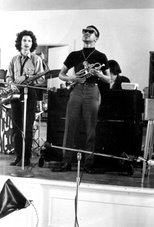
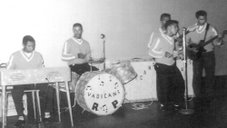
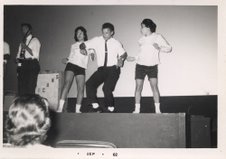
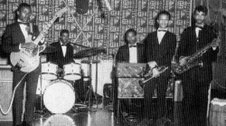
The kids in our Frazier Estates neighborhood had formed a band by 1965 and I was leading with my trumpet and voice. The first group, The Soul Internationals, included my brother Gerald on guitar, Doug Yoder on bass, Richard Madry on tenor saxophone, Chuck and Debbie Davidson on drums and piano. We rehearsed James Brown songs, The Four Tops and Temptations, Otis Redding, etc. Uncle Bill Chapman, an announcer on WVKO, used his connections to get us mentions on the radio and appearances at teen dances with the Belmont Youth Club.
In the early summer of 1967, I was appearing on stage at Columbus’ Veteran’s Memorial Auditorium as a screaming teen in Bye, Bye Birdie, with Gene “Bat Masterson” Barry, singer Arlene Fontana, comedian Totie Fields and Ted “Lurch” Cassidy. Fellow teen Andy Robinson and I were the biggest hams of the entire company, singing and playing the Righteous Brothers at every party or rehearsal break. I cherished that entrance into show business; becoming an adopted son to Totie Fields and George Johnson, her husband/music director. She died two summers later, losing her inspiring bout with cancer.
I became a paid, professional musician, July 21, 1967, seven weeks before my seventeenth birthday.

Sunday, April 22, 2007

Arnett, 1968, The Dave Workman Blues Band, Capital University

In the late spring of 1968, less than a year after my professional beginnings, I was about to start gigging with my third professional group, the Dave Workman Blues Band. Hank Fisher, leader of the Metronomes, called me to tell me about a new band that was rehearsing and he wanted me to be a part of the horn section.
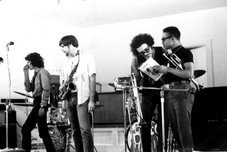
Hank and I arrived on the westside of Columbus one after school, at the home of organist Tom Collins and the rehearsal assembled a very talented group of young players. Tom was a senior in high school, but he was a devotee of jazz organist Jimmy Smith. The solid drummer was Andy Smith, who was an alumni of the Grayps, an Arlington rock band. Pat Geany was bassist with the psychedelic sensations, The Four O’Clock Balloon. The horn line was made up of Hank on alto sax and vocals, Neil Gadous, tenor sax, Vaughn Weister, trombone and me on trumpet. A smokin’ rhythm section and four horns.
The guitarist and namesake of the new group was Dave Workman, a worshiper of B.B., Albert and Freddie King. Dave, a Worthington, Ohio brat, had become a star in the mid-1960s when the British Invasion hit and his band, The Dantes, started carrying the early Rolling Stones flag and they had a local hit, Can’t get Enough of Your Love. Dave could play his wicked sounding guitar by stealing everything he could from the King boys.
We started covering the best blues songs, The Laundromat Blues, Crosscut Saw, Sweet Sixteen, Hideaway, Born Under a Bad Sign and occasionally we’d stray into jazz territory with themes like Bluesette and songs from the new Blood, Sweat and Tears group, formed by Al Kooper or Chicago Transit Authority. James Brown got covered (Lickin’ Stick) and within two weeks of rehearsal, we had booked an appearance at Valley Dale, other halls and clubs around the Capitol City.
By the summer a new club, Mr. Frankie's, opened just east of Nelson Road on East Main Street and the Workman Blues Band made a name within weeks of packing in hippies and serious musc fans there. We even got an invitation to go north to Chipawa Lake in Lodi, Ohio, to be a part of a weekend rock festival and we shared the stage with the Blues Magoos.
During a July week at Mr. Frankie’s, I got playful on stage, as Dave was taking a guitar solo, and I put a piece of ice on the back of his neck. He reacted by cursing, bashing me in the face with the neck of his guitar and stomping off stage. I finished singing the song and leaped off stage to continue the battle off stage, but I was restrained from beating on Dave by Hank. I finished the week, but was replaced the next week by trumpeter Lee Savory.
I claim to be the first person fired from the Dave Workman Blues Band. The band continued for at least two decades around the Columbus area, bringing in legendary musicians like Willie Pooch, Bili Turner, Vince Andrews, Steve Burkey and others. Dave still makes music in San Francisco and his blues band was the high point of an era that finished the late 1960s.
I started Capital University, September 6, 1968, on my eighteenth birthday. My first classes were in the Conservatory of Music and, despite not having private lessons, I had pretty good chops in piano, trumpet and music theory. What was missing was my ability to sight read music, a definite advantage when in the competition of a noted music school.
I had plans of becoming a music educator and one day having a great high school marching band. However, no one informed me that the university didn’t have a marching band for their football team’s games. So I shifted my focus from education to a performance major.
But performing in a classical tradition was never in my plans; I wanted to play everything but the music of the masters. My masters became Ray Charles, Frank Zappa, John Mayall, the Beatles and within a short time, I had organized a new group of players from the ranks of my fellow students. Fess Parker brought his bass from Toledo, Steve Trout, played guitar, Steve Dodge was an excellent drummer and I recruited my younger brother, Gerald, who was still at Jonathan Alder High School, to play guitar with us in the campus snack bar.
David Papke and Ron Coats were upper classmen at Capital who had a Simon and Garfunkle thing going, which I wasn’t all that keen on. But by the spring of 1969 came the song Bridge Over Troubled Water and my group, Cash McCall and his Bumswipe Blues Band Boys, were backing them at campus assemblies and antiwar moratoriums.
But at a campus coffee house, I was to soon start jammin’ with my new best friend, guitarist Don Chakeres.