Tuesday, October 26, 2010

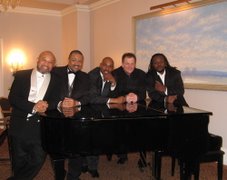
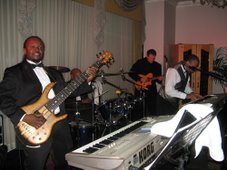
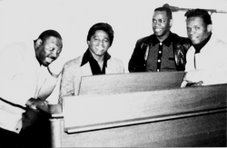
Interview With Bruce Woody, bassist


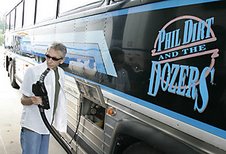
When my family came to Columbus, I went to Champion Junior High School, along with my sister, Mary Williams. I took violin lessons during those days. I fell for the magic of Stomp Gordon when we were in a Downtown juvenile detention center; that’s where they sent kids for fighting. Stomp and I wrestled together there and we had a man who coached us. I got out of the center first and, one day when Stomp was driving around town in an old Desoto, he saw me. The car was painted with Stomp’s musical advertising; you had to do that during those days.

I told him that I had been messing around with the guitar and he said, “If you get a bass, you can make seventy-five dollars a week playing.” That caught my ear really quickly so I set about finding a bass and, although I don’t remember where I found one, I remember that it was a good one; it just needed to be set up properly.

Before I went out on the road with Stomp, I played with a pair of dancers named Silk and Satin; the male dancer’s name was Claude Grant. My next job was on the road with Ida Clark and the Darktown Scandals; she made famous the song Wild Women Don’t Have the Blues. She had a bunch of teenagers in the band and we got no money; only five or ten dollars every once in a while.

One person on the show, a tremendous tap dancer named Ground Hog, should be documented. When he wasn’t dancing, he was the drummer and I didn’t know anything about playing bass, so he guided and kept me together. He was an African and he had one bad eye that seemed to wander. I was on tour with Ida Clark for three months and it seemed a very long time.

When I got home Stomp was ready for a bassist. On our first gig, we went to a popular spot in Dayton that all the musicians played (Note: According to Lester Bass, also a bassist, the likely spot was called Farm Dell, a barn located on Ruth Avenue, owned by the McLin Family, several generations of funeral directors and politicians. The business was a country club for active democrats and Elks Lodge members. The entertainers and bands included the top names in the business; Dizzy Gillespie, Paul Gaiden, Tiny Bradshaw, Lucky Milender, Buddy Johnson and Snookem Russell).

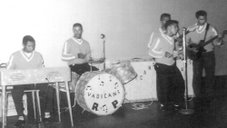
Some of our publicity photos have us pictured in tiger skin coats and we would even wear those things in July and August. They were really heavy and I would sweat and soak that coat so much that you could put a cigarette out on it and it wouldn’t burn.

I left Stomp Gordon’s Band because of misunderstandings that I don’t want to discuss; I just want to remember the good times, because we had so much fun. And the women.....! I met a woman named Marion in Minnesota and she was so good to me that I stayed in Minneapolis and the band went on, ending up in Anchorage, where he met Billie Holiday (December, 1954).

I got a call from Stomp from Green Bay, Wisconsin, as they were working their way back to Columbus. I remember it being at a time when snow on the ground was up to my waist; I had never seen anything like it before. His bass player wasn’t familiar with the show, so he asked me to come and join them.

That engagement was star time for me; I wasn’t really a bass player, I was a clown. I walked in and, since I knew all the material, I tore the place up. I walked around for a couple of weeks with my chest stuck out, but eventually it caught up to me and my ego got deflated. I remember the girls in Green Bay.

I eventually married and the settled, slowed down lifestyle was the best thing for me. I married a woman with children, and a daughter that I had with a relationship in Florida, eventually found me and became a good part of my life. I have a granddaughter that I enjoy.

The place that we made our name in Columbus was called the Musical Bar on Parsons Avenue in the Southend.

Note: Bruce Woody passed away June 19, 2008.

Friday, October 8, 2010

Edith Clark, pianist, Flytown resident


Edith Clark was a pianist and singer who I met once in the 1980s, doing a stint at the legendary piano bar called the Dell, on Parsons Avenue. I found her photo in the archives of the Columbus Call-Post, a Cleveland based Black newspaper chain that continues to serve Ohioans.  


I interned at the Call-Post in the early eighties and a book that Edith had written came into my possession, through my friend and fellow journalist Charles Briggs. In The Way, The Gifts and The Power, published in 1971 by New York's Vantage Press, Inc., Edith created an autobiographical character named Isobel Grant, who grew up in a community in Columbus called Flytown. Now known as the Arena District, the area was also the community where musicians Hank Marr and Ronnie Kirk, as well as Edith, grew up in the twenties and thirties.


Here is the narrative that begins on page thirty-six of The Way, The Gifts and The Power, describing the community in the 1920s;


"Flytown was a community singular unto itself. It nestled around the Ohio State Penitentiary, a stones throw from where the Olentangy and Scioto Rivers merge, a hop, skip and jump from the geographical center of Columbus. Bordering Long Street on the south, Flytown meandered along the edge of Front Street past Naughten, Maple and Vine, crossed the Pennsylvania Railroad tracks at Spruce, skirted down Goodale Street past the park, followed the street car line past Neil Avenue, cut through Henry Street to Buttles, then up to an undefined line which eventually ended at the Olentangy River to the West.


A railroad spur track ran behind Michigan Avenue to serve the many factories which lined the river; the Indianapolis Paper Stock Company, the Pipe factory, the Wire Works. The factory that made molds edged a big vacant lot where my father, Carl, and his cronies played baseball for barrels of beer. 

Past the mold company there was a small open field where the kids played and men kept their dump wagons. There was the Paste factory, the Piano company, the Vault company, the derrick makers, the stove factory, and on up towards First Avenue, the Oleo makers and the beer company. On Michigan Avenue, proper, there stretched the lumber company.


Carl was working for the Power and Light Company downtown when he mashed his thumb on the job and, taking pride in his male invincibility, ignored the soreness until it festered into gangrene and he lost part of his left arm, almost up to the elbow, in order to save himself from dying due to blood poisoning. 

With the money that he received as compensation for the lost of a limb, Carl and Reba, my mother, paid cash for a house further down Michigan Avenue.

By this time the bootlegging and highjacking Italians were becoming affluent enough to leave Flytown and move across the river into a newly developed suburb which began at Goodale Street. Our family was the first colored family on that block. Reba took great pride in jerking the "For Sale" sign as a symbol of an answer to some White neighbor who called to inform them that the house was not for rent; it was for sale.


Carnivals and medicine shows often set up on the baseball field on the corner of Poplar and Michigan in the summer time and the neighborhood reveled in the novelty of the show put on by the medicine man. The Godman Guild was the heart, the hub, the center around which revolved the community of Flytown. It taught the residents laws and ordinances, showed them the way wherein they must walk and brought their causes to the rulers of the city.


Long before the nation would be confronted with the same problem, the Godman Guild met and found solutions, faced squarely and honestly the needs of the neighborhood and welded the transplanted souls into a solid acknowledgment of pride in themselves and their community. The pillars of society of Flytown were as high-minded and respectable, virtuous and God-fearing as any people in any neighborhood; for their children they had the same goals as any human being in the nation."


Thanks to Edith Clark, we have a glimpse of Flytown, a community that ceased to exist in the 1960s when urban renewal and highway construction brought progress to the near Northside of Columbus.

Monday, September 27, 2010

Interview with Bobby Alston, trumpeter


I’m a third generation trumpeter, born in 1945 and my father, Bunky Alston, gave me the horn when I was three. I played in school orchestras, junior and senior high school. I was about fourteen when I started in Raleigh Randolph’s band. I had to join Local 589 because Raleigh was the union secretary and I wasn’t supposed to be playing but I got a job.

My dad played trumpet at all of the joints with Percy Lowery’s Orchestra in the 1930s; he started when he was three or four. My grandfather worked on the railroad and the roundhouse was at Twentieth Street and Leonard Ave. The quickest way home was through the alleys and he found a trumpet in a trash can.

Grandad had six kids, three boys and three girls, and he told the boys, “Whoever can play it can have it.” My Uncle Harvey was the oldest, he got the first shot at it, Uncle Cory tried it but couldn't play it. My dad picked it up and got a sound out of it and never put it down.

In the 1930s and 40s, he was playing a similar style to Louis Armstrong, Roy Eldridge and later, Dizzy Gillespie. Louis got upset because my dad had a gravely voice and did all of his songs. Louis later became friends with my dad.

My father was the number one trumpeter in Columbus and during those days there was someone in Columbus on every instrument that no one in New York could mess with. There was someone here during the thirties who could handle anything you brought in from anywhere. Musicians were a dime a dozen; there used to be a lot of competition and your reputation would be at stake every time you hit the band stand.

The first real group I was in was the House Rockers or the Wallace Brothers and it was ten pieces, five pieces of rhythm and five singers. I was with them for three years, then I hit the streets and was with the Sheraton Hotel circuit.

The first time I met Rahsaan Kirk was at the Jazz Workshop in Boston in 1965 and we stayed friends until he died; he came to see me a week before his passing in December, 1977. He knew he was going to die so he had some inspirational things that he wanted to say about keeping the faith.

He was passing his mantle on to cats that he knew. And in 1973 we had a set for him at Club 905 with Don Patterson on organ and Darrell Redmond on drums.

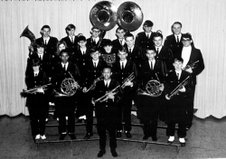
I was in Ted Turner’s East High School Band in the early 1960s. We had Fred Thomas, drums, Lee Savory, trumpet, Nate Fitzgerald, tenor saxophone, Craig McMullins, guitar. That band won the Ohio State championship in 1963 and we traveled the state giving clinics and showing bands how we won.

We were doing Quincy Jones arrangements and I was student director of the band. I was leaning towards Gerald Wilson’s compositions that were very modern. We had a group that would meet at the Beatty Center as a jazz club and that’s when I met pianist Bobby Pierce.

During the time I was at East High School I won two scholarships to the National Stage Band Clinic in East Lansing, Michigan, a summer camp for musicians and Stan Kenton was the founder of it. I got a chance to study with Donald Byrd, Louis Gasca and Marvin Stamm. I learned a lot about playing the instrument from Marvin Stamm, who was a senior at North Texas State.

Back in Columbus I hung out at Mellman’s Club 502 on Leonard Avenue and I saw Horace Silver, Chico Hamilton and Cannonball Adderley. When you went to the top jazz club in town you put on your best three piece suit to go to the 502, the Club Regal or Club Cadillac. The music was right and people looked their best.

I was too young to go into those places but my uncle Harvey Alston was the top black policeman in Columbus and as long as I stayed out of trouble it was OK to visit the jazz clubs. I played my horn and went home.

I played Club 502 with Esther Phillips and Dionne Warwick, who had a hit with Walk On By and Anyone Who Had a Heart. But Esther had a nasty attitude and we quit; she thought she was Dina Washington.

Organist Jack McDuff, out of Pittsburgh, Pennsylvania, was looking for a horn section in 1970 and I got the reference but had no money. I called Billy Hopkins, Sammy Hopkins’ son, who was a good friend and had a regular job. We went to Cleveland, I sat in with McDuff and we turned the place out and I got the gig. We went on to record and album together.

Thursday, September 9, 2010

Nancy Wilson, jazz vocalist


On February 20, 1937, Nancy Wilson was the first of six children born to Olden and Lillian Ryan Wilson in Chillicothe, Ohio. Nancy's father would buy records to listen to at home and at an early age Nancy heard recordings from Billy Eckstine, Nat Cole and Jimmy Scott with Lionel Hampton's Big Band. Nancy says, "The juke joint down on the block had a great jukebox and there I heard Dinah Washington, Ruth Brown, LaVerne Baker and Little Esther Phillips".

Nancy became aware of her talent while singing in church choirs, imitating singers as a young child and performing in her grandmother's house during summer visits. By the age of four, she knew she would eventually become a singer.

At the age of fifteen, while a student at West High School in Columbus, she won a talent contest sponsored by local television station WTVN. The prize was an appearance on a twice-a-week television show, Skyline Melodies, which she ended up hosting. She also worked clubs on the east side and north side of Columbus, Ohio, from the age of fifteen until she graduated from high school, at age seventeen.

Unsure of her future as an entertainer, she entered Central State University in Xenia, Ohio, to pursue teaching. She spent one year in college before dropping out to follow her original ambitions. She was singing with Rusty Bryant's Carolyn Club in 1956. She toured with them throughout Canada and the Midwest in the late 1950s and while with Bryant and pianist Hank Marr, Nancy made her first recordings.

When Nancy met Julian "Cannonball" Adderley, he suggested that she should move to New York City, believing that the big city would be the venue in which her career could bloom. In 1959, she relocated to New York with a goal of obtaining John Levy as her manager and Capitol Records as her label. Within four weeks of her arrival in New York she got her first big break, singing four nights a week and working as a secretary during the day. John Levy sent demos to Capitol Records and they signed her in 1960.

Nancy’s debut single, Guess Who I Saw Today, was so successful that between April 1960 and July 1962 Capitol Records released five Nancy Wilson albums. Her first album, Like in Love, displayed her talent, with the hit R&B song, Save your Love for Me. Adderley suggested that she should steer away from her original pop style and gear her music toward jazz and ballads.

In 1962, they collaborated and produced an album, Nancy Wilson/Cannonball, which propelled her to national prominence. Between March, 1964 and June, 1965, four of Wilson's albums hit the Top Ten on Billboard's Top LPs chart. In 1963, Tell Me The Truth became her first truly major hit, leading up to her performance at the Coconut Grove in 1964, the turning point of her career and garnering critical acclaim from coast to coast.

In 1964 Nancy released what became her most successful hit on the Billboard Hot 100 with (You Don't Know) How Glad I Am which peaked at number eleven. She successfully juggled her personal life and her career and nearly fifty years later she is still a grand dame of jazz vocals.

In November 1998, both of her parents died; she calls this year the most difficult year of her life. In March 2008, she was hospitalized for lung complications, recovered and claimed to be doing well. In the same year, her husband, Wiley Burton, died after suffering from renal cancer.

Wednesday, September 8, 2010

Delores Grettavon Williams Howard, my mom


At 2:00 a.m., on the morning of Wednesday, September 6th, 1950, one month after the Korean War began, George R. Howard, 25, from Walnut Cove, N.C. and recent graduate of Bluefield State Teacher’s College, with his friend, Arthur Froe, driving, took his young wife, Delores, a recent freshmen at Bluefield State, from their home in the coal fields of Gary, West Virginia. Their destination was Stevens Clinic, in Welsh, West Virginia, six miles away.

According to my grandfather, Robert F. Williams, Cleveland Ohio, “Your father came back from the hospital and said ‘it's a boy!’” Grandad says that Delores was like all young moms, enjoying the great feeling of the gift of a child. At thirty-seven, he says that he surely felt young being a grandfather. The boy was named Arnett Douglas Howard, after a brother of George’s that died in childbirth.

Our family lived in the coal mining village of Gary, West Virginia, where my maternal grandfather, Robert Fulton Williams and his parents, George Wesley Williams and Fannie Kate Hairston Williams had been since 1915. Fannie had died in 1928.
Myrtle Hairston, my maternal grandmother, did not desire motherhood and my grandfather raise my mother, with the help of John and Nan Harrison, Myrtle’s brother and sister-in-law. I only saw Myrtle once; at my mother's funeral in 1963.
My parents met at Bluefield State, a historical black college in West Virginia. He was a young veteran from World War two from North Carolina; she a freshmen, eight years younger. He graduated with a degree in chemistry, with aspirations of going on to Meharry Medical College in Nashville. However, with my mother's pregnancy, there was a need to marry and provide for my little hungry mouth. They married on February 25th, 1950, four days after mom's seventeenth birthday.

The Howard's moved to 175 Chicago Avenue, Columbus, Ohio in 1951 and the second baby, Gerald was born in June 22nd to 1952. After an extensive job search, George began a thirty-three year career as an industrial chemist with Westinghouse Appliance Division on Columbus's West side in 1953. After the twins, Keith and Kevin, made their appearance on September 17th, 1955, Delores began employment with General Motor’s Delco plant.

When I was six or seven, a Christmas gift for Gerald and I were ice skates. Mom took us to Franklin Park several times during cold winters to try them out; she had a pair also. I remember getting scrapes on my ankles from skin chafing against skate leather, but I have a vivid picture of being on ice with my mom.

I also have first memories of accompanying her to the beauty shop on Mount Vernon Avenue, the heartbeat of Columbus's Negro business during the mid 1950's. And there are recollections of women, gossip, hot steel combs resting over flames and the aromatic bouquet of smoldering hair being style; the decorous rituals of African women through the ages.

The first Church our family became aligned with in Columbus was St. Paul A.M.E. on Long Street. The Howard's desire to raise their four boys away from Columbus's poverty plagued West side and after their evacuation when floodwaters ravage “The Bottoms” in January, 1959, they were even more determined to escape to a higher ground. The family purchased an acre in a new development in Union County, Ohio, Frazier Estates and spent the summer of 1959 constructing their dream home.

My father labored over nearly every inch of our new home, contracting excavators to dig the basement, assisting a work associate who laid the foundation block. When the house was under roof and hardwood floor was being laid, he gave me my first job as his assistant. I apprentice in the building trades at age eight and some of the most treasured memories where the home cooked meals that Mom would remove from our picnic basket on Saturday or Sunday.

The Howard’s and their four boys moved into 8564 Frazier Road, Plain City, Ohio, on November 9th, 1959, next door to the Thomas Crumps and their four girls, who had preceded our move by one month. Frazier Estates was to grow into a neighborhood of twenty-four homes occupied by African-American families.

Soon after moving to Union County, our family joined Allen Chapel A.M.E. Church in Marysville, Ohio. Delores sang with the choir, George supervised the Sunday schools and we boys first tinkled on the church’s piano. I do remember very clearly as summer's day in 1960 when she came home hauling a used, upright piano in a rented trailer attached to her Chevy. We unloaded the huge instrument and installed it in the recreation room of our new house.

Within an hour of the piano being attached by eight hands, I had composed a blues tune. She started Gerald and I on lessons with Mary Liggins, wife of our minister, Reverend Tom Liggins. Mrs. Liggins says Mom traded piano lessons for church work and Mrs. Liggins instructed us from a book by John Thompson entitled Teaching Little Fingers to Play.

Within months, our home was filled with not only a piano, but drums, a guitar, bugle, xylophone, whistles, bells, percussion instruments and Mom's prized reel recorder, where we first heard George Gershwin's Rhapsody in Blue.

The Howard house soon became a magnet for musical instruments; a bugle from Billy Leftwich, a guitar and field from Uncle Al Turner, a classic drum set from Mrs. Cornetta Palmer whose late husband, Pete, played with 1930's jazz bands. We had a home reel tape recorder that was mom's pride and it was from that recorder that we learned to love George Gershwin’s Rhapsody in Blue.

Delores had drive. She was a church leader at Allen Chapel A.M.E. Church in Marysville, Ohio. Hearing her sing in the choir on a Sunday was a treat for all. I remember a Sunday in 1962 when an afternoon program featured a young Columbus attorney, Robert Duncan, who she had met during a governor's campaign that brought James A. Rhodes into office in 1963.

Bob Duncan became a landmark federal justice and Jim Rhodes became governor of the century in Ohio. I vaguely remember that she was appointed to a state office by Governor Rhodes after his inaugural in 1963.

My mother, Delores, who planted of the seeds of music in her four boys died in the early spring of 1963. I was twelve and one Sunday April, 7th, when we return home from Sunday services at Allen Chapel, my brothers Kevin and Gerald raise the garage door and saw mom’s arms dangling out of the door of her Chevy parked inside. She had stayed home from church many mornings during the previous months, suffering from depression that we children knew little about. Her self-asphyxiation was the end of a difficult time for her.

Hoyt Locke aka Doctor Bop, radioman


I was a youngster of six years old, the oldest of four brothers and I was laying in bed one night, listening to WCOL-AM. The voice I heard was of Hoyt Locke and he said, “This is Dr. Bop on the sceeeene, with a stack of shellac and my record machine. A little country boy from across the track, so down with it baby that I’ll never go back.”

Now, let’s make clear that Hoyt Locke was not the first deejay playing rhythm and blues/rock and roll on Columbus airwaves; that distinction comes to WVKO’s Eddie Saunders, who in 1955 was Jumpin’ Jive at Five-O-Five. But Dr. Bop was the first to create a rock and roll culture in Central Ohio.

Locke and his brother, Edgar, came to WCOL-AM in 1956, as clients for Bop Records, located at 474 E. Main Street. They were at the studios creating fifteen minute infomercials, when the announcer got up an left, leaving the the station without a voice. The studio engineer asked Hoyt to take over and the fifteen minutes became a six hour, all night broadcast.

The first paid advertising for Dr. Bop was City Service Gasoline, at Garfield and Mt. Vernon Avenues, purchasing three months worth of air time. Soon it was followed by City Gas, Certified Oil, the Beverly Drive-Ins, Buckeye Potato Chips and other locally owned business.

Dr. Bop was flamboyant, controversial and his race wasn’t hidden. He refered to his “silver foxes”, young White women who followed his show. He stayed with WCOL until 1959 and in 1960, he went to Milwaukee, Wisconsin, to star in radio there.

Locke was born in Chattanoga, Tennessee, March 11, 1912 and his family moved to Barthman Avenue on Columbus’ Southside. He attended Reeb Avenue Elementary School and he passed away a month shy of sixty-four on February, 24, 1976. But, according to the book Life is a Jukebox, by former WCOL announcer Rick Minerd, Dr. Bop popularized rock and roll/rhythm and blues among Whites and created an identity for WCOL that made it the number one station for the next several years.

Rahsaan Roland Ronald Kirk, reed specialist, visionary


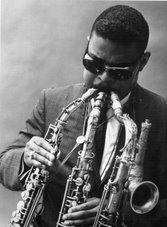
Rahsaan Roland Ronald Kirk was born August 7, 1936 in an area of Columbus called Flytown and grew to be a world renowned musician, specializing in reed instruments. Sightless from birth, he played tenor saxophone, flute, stritch, manzello, nose flute and he thought about music constantly, banging, plucking and blowing on anything that would make a sound from age five.

He is the subject of a book entitled Bright Moments, by John Kruth and I have read the book twice, enjoying a new picture of the book upon each reading. Ronnie was his first name, but in a dream he envisioned himself being called Rahsaan. His playmates were musicians; Hank Marr, Gene Walker and Bruce Woode. Here is an excerpt from the book;

“One of the first people to open me to music when I was about three or four years old was a gentleman in my family named Elijah Broderick. He played a beautiful piano, very original to me at the time. It still sounds original in my ear today. I associate it with the stride was of piano playing. His left hand was very dominant. He didn’t listen to Fat Waller or anyone. It was what you would call a natural gig. He played his stuff on the black keys. Now, that’s not to say he was hung up on 'blacknuss.' It was just something that happened.

One Saturday morning when I was about five or six years old, we came back from this rummage sale and my mother gave me this paper bag. I could feel this object in it. I took it out and it was an old, beat up bugle! She said she paid fifty cent for it.

The next Sunday, after I got the bugle, my uncle came down and started playing the piano and I went and got the bugle. I don’t remember what we were playing but whatever it was, it really left an impression on me.”

Rahsaan became a multi-instrumentalist, acquiring the ability to play the tenor saxophone, stritch and manzello but to play them at the same time. He began playing two horns at aged seventeen in the Boyd Moore Band and advanced his playing with Bruce Woode and the Chips. Although he was thought as a novelty, he was to develop his technique, “ I hope when the era comes that people are playing two and three horns, they point back to me,” says Rahsaan.

I have a film of the 1972 Montreux Jazz Festival, when Rahsaan is at his peak with his reed playing. Or should I say reed playing and cacophony. In an hour Rahsaan raised to his lips and blew tenor sax, stritch, a siren-like whistle, clarinet, flute, nose flute, pitch pipe, manzello and a shell. Close by he employed a foot cymbal and a gong. Chaos ruled the stage.

I saw Rahsaan on three ocassions and I regret not seeing him a fourth, when he appeared in Columbus for two weeks at a nightclub. I first saw a speaking engagement at the Ohio State University Student Union, a performance at the Ohio Valley Jazz Festival and after he had a stroke, I saw him at Gilly’s Nightclub in Dayton.

Rahsaan was likely the greatest musician who played three instruments. And he lived a lifetime in forty-one years, dying on December 4, 1977.