Tuesday, August 31, 2010

An Interview With Rusty Bryant, saxophonist, recording artist


My father, Herman Bryant, had a funeral band and the rehearsals would take place in the casket room which was the largest room in the funeral home. I would sit there in the space, watch them practice and I became so familiar with the each instrument that I knew what each instrument was doing.

One night the tuba player didn’t show for rehearsal and my father called The Waltz She Save For Me. I walked out in my little pajamas with the flap in the back, walked under the tuba and started to play The Waltz She Saved For Me. The mouthpiece almost covered my nose, but I played that song; I was four years old at the time.

I remember what inspired me to play was Lionel Hampton , who came through the Palace Theater with Arnett Cobb and the other saxophonist was Johnny Griffin. Johnny was close to our age and they didn’t have a coat to fit him. His coat was so long you couldn’t even see his fingers, but he could play.

Me and a boy named Leroy Cobb lived in a double and we both were learning how to play saxophone. I went and got my alto and went into the bathroom on one side of the double and Leroy went to the other side of the double and all night long it sounded like we were calling cats, just skreeching, trying to copy Johnny Griffin all night long.

I think I had my horn about a week before I was playing professionally and I joined Stomp Gordon’s band. I hadn’t even seen a saxophone before I started on the road with a band... I took to it like a duck to water.

And the saxophone belonged to my father, Herman. He had a saxophone behind the couch and I took it out and that’s how Paul Cousar took to playing. I showed him a scale and, boom, he took off. The first time he ever touched a saxophone was in my living room at Long and Ohio Avenues.

That was on a Monday and that weekend I went to Nelsonville, Ohio with Stomp Gordon for our first job. I was thirteen years old and I’ve been on the road playing ever since.

Norris Turney, Harry Ross, Wendell Hawkins and I were all up there playing. This cat came in and Norris didn’t even know he was in town. We had finished the set; it must have been ten or eleven o’clock. Tommy Lucas took out his horn; he was the alto saxophone player from the Glen Gray Band.

So the rhythm section got up and Tommy Lucas started making his horn talk. Norris went and got his horn and wasn’t nothing but two horns up there. They both had chairs sitting side by side. And after they finished this number, one of the jam tunes of the day. They finished that tune, everyone applauded and they started into Cherokee. And man, those two got to battling; that was a classic battle, more saxophone than I ever heard at that time.

Pretty soon, I looked around and it was time for the club to close. And these two weren’t finished with each other yet. They didn’t even put their horns in the cases, got into cars and went over to the Poor Lover’s Ballroom at Mt. Vernon and Champion Avenues, where Sammy Hopkins Band used to play. The joint was closed and the man was just counting the cash.

The crowd and all were following those cats who went through the door, went to the stage, got back on the piano and took up the song where they finished at the bridge. When they finished that song, it must have been five or six o’clock in the morning. They battled four and two measures on that song; they did everything you could do. Norris Turney and Tommy Lucas engaged in one of the most classic saxophone battles that there ever has been around here. Saxophonist Jimmy Allen can tell you about that one.

I was just a youngster at the time. I’ve had plenty of those battles at the time I was twenty, twenty-five years old. I was out signing autographs at the Seneca Hotel on Broad Street, radioman Spook Beckman was with me. There was a prom at the hotel that night and Nancy Wilson was part of the trio that was playing at the prom. It was very clear amongst the three voices tht I heard that night which one was ringing through and I could hear a lot of potential. I talked to her after they finished singing and together we went to her father, Olden Wilson, and asked for permission for her to come out onto the road and start her career.

After we had her on the road for three or four years of training, I called Cannonball Adderley to get a second opinion. Her concurred and we talked to manager John Levy and that’s how she got started.

I was playing with organist Hank Marr, we went through Cincinnati and we were looking for a guitarist, finding Wilbert Longmire. Hank agreed that Wilbert would be dynamite. The rest is history.

Things were a lot different fory years ago, it doesn’t seem that long. There’s more of a chance for the young musicians to have a shot at the big time than there was in the days when Hank and I were coming along. Music is like being a farmer, owning so many acres of corn or what have you. You have to been able to take your commodity to the marketplace; you can’t sit back and expect the marketplace to come to you. The competition is really extensive and a musician has to start very early at being a businessman was well as a performer.

Music is an offspring of the time and a lot of what you hear is a very confused, angry sound, due to the times we’re living in. If I am without music, I am without a great portion of my life. I love music very much. This was planned before I was born; God knew how I would feel about music. That’s why he gave it to me.

I knew that the sound and feeling of music was a lifelong heritage for me.

Note: Rusty Bryant passed on March 25, 1991, due to complications of diabetes.

Monday, August 30, 2010

My Pal, Dimitrius Roberts


Dimitrius Roberts and I met and bonded in 1999, when he was four or five. I came by the Childhood League center to play one afternoon and I saw this little guy, who looked like a miniature Arnett Howard. He pointed up at the band, as to say, "Look, mom, trumpets and saxophones.

Later we led a mardi gras parade around the yard and naturally, I went out, took his little hand and we marched around the grounds. Afterward, as we sat, I took his hand and used it to play some songs, Yankee Doodle Dandy, etc. We finished our concert, but he definitely made an impression on me.

Early in the next year, I took a spring ski vacation to France. When we returned home to Columbus, I had a phone message for me from Lisa Courtice, Childhood League executive director. "Dimitrius has died and we're going to have a memorial service for him tomorrow." So in the shock of having someone so young pass away, I dedicated the rest of my day to immortalizing him in a New Orleans-style, second line song.

My Pal Dimitrius

Chrs. My pal Dimitrius, he sure is curious.
I think it’s marvelous, I’m really envious.
He simply is a plus, my pal Dimitrius.

A1. Marching’ to the river early in the day
I’ll take my horn and my protege’.
Dimitrius, we’ll get harmonious,
Play loud and boisterous. Me and Dimitrius

A2. He’s got a nickel and I’ve got a dime.
We’ll make people dance in the summertime.
The two of us, we will be devious
Bordering on riotous. Quite loud and furious!

A3. With trumpets on the left and drums on the right
Parading into heavenly sunlight.
Just glorious. I’m talking’ thunderous.
Heaven is prosperous, with my pal Dimitrius.

My pal Dimetrius, he sure is curious.
I think it’s marvelous. I’m really envious.
He simply is a plus, my pal Dimitrius.

I came to the memorial, they saved the song for last and we had a mardi gras parade in his honor. It is ten years later, I see his grandmother periodically and we reminisce about Dimitrius.

Ellen Barksdale, pianist, gospel musician


Arnett and Ellen Barksdale

Ellen “Mom” Barksdale celebrated her ninety-second birthday in late March, 2009 and she fooled everyone who can’t believe her age. She was a faithful member of congregation that has supported Shiloh Baptist Church since 1869. She was also one of my links to the music teachers of the last century.

She began taking piano lessons in 1924 at age nine and her longtime teacher was Helen Carter Moses, who had a studio in her home on Columbus’ Hilltop. Ellen remembers that Black families lived on Highland or Wheatland in those days and Mrs. Moses owned and drove a Ford Model T.

Mom Barksdale says that she not only studied with Mrs. Moses until she was twenty, but she became her chief instructor when the Carter School of Music relocated to Spring Street and Hamilton Ave. Each Sunday morning Mrs. Moses aimed the Ford towards Shiloh, where she was not only organist but director of the gospel choir. She also founded, with E. L. Rockhold, The Music Lovers Guild, a fifty-two member chorus founded in 1934.

In time Mom Barksdale took over leadership of the choir and continued for thirty years. She remembered some of the other piano teachers who taught the children of Columbus. In 1920 J. Cleveland Lemons taught and founded the Columbus Chapter of the National Association of Negro Musicians (NANM), who presented opera singer Marian Anderson in 1924.

Another noted teacher was Mamie Artist, who was a member of Parker’s Popular Players and founder of the Columbus Choral Club in 1922. Other outstanding instructors were Margarite Coleman and Ara Warren Arnold.

Mom Barksdale and I started playing piano and trumpet duets together during the 1980s, at the invitation of Rev. Harold Pinkston, pastor of Good Shepard Baptist Church, Columbus. We have performed together at church services, community concerts, birthday celebrations, anniversary parties. For several years we made regular visit to her good friend Helen Ramsuer at Lutheran Village, entertaining the luncheon audience with religious favorites. We have also recorded a number of songs together that have appeared on two of my compact discs, as well as two compact disc featuring her.
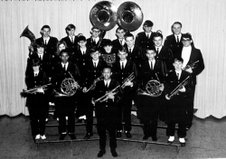
Mom Barksdale was inducted into the Columbus Senior Musicians Hall of Fame in 1999. She completed the cycle of life in June, 2009.

Friday, August 27, 2010

Robert F. Williams, our grandfather


Arnett, Robert Williams and Kevin Howard

Robert Fulton Williams, the father of Delores G. Williams Howard and maternal grandfather of the Howard Brothers, was born, March 1, 1913 in Martinsville, Virginia. He said that his memories of life began when he heard the noise of a coal tipper when he was two years old. “My family was traveling from Martinsville to Gary, West Virginia to find work in the coal mines and I was awakened by the loud, rough sounds of that machine grinding up coal. That’s the first event I can remember, however I have remembered everything since.”

His mother, Fannie Kate Hairston Williams, had a brother who worked in the mines in Gary. The family, George Wesley Williams, father, Willie Mae, daughter and Robert, lived with their relatives until George found a house. The Williams were among many Negro families that were trading the hard life, working on farms, for the harder but steadier paychecks that were offered by the booming coal industry/steel/railroad industries. They joined immigrant families from Europe, who were being met at Ellis Island in New York to supply labor for industry, raise gardens, hogs, chickens and children. He said that his family was never hungry.
During the days surrounding WWI, Gary mines were owned by U.S. Steel. In addition to coal mining, there were coke ovens that turned the coal into coke, sent to the steel mills of Pennsylvania and Ohio. U.S. Steel was a major American company and it was a boom time with lots of jobs. Before the rise of the United Mine Workers Union (UMW), miners were industrial slaves, trapped into hard jobs. "A typical day started at six am., workers ate their meals underground and since it was more important for the companies to get the coal out of the ground than the men, sometimes it would be nine-thirty pm. before we climbed out of the shaft. John L. Lewis and the UMW came along, negotiated and organized conditions for miners that we’d never dreamed of."
Because of the UMW contract bidding, mine workers were able to get eight hour work days, vacations, better wages, health care benefits and, for the first time, miners retired with pensions and could afford a reasonable life. "These were benefits that we had never even dreamed of,” he said. "Mining towns of the early twentieth century surrounded company owned houses and stores. Company doctors delivered babies in houses that had no water or electricity, until the 1920’s."

His first recollections of school surrounded following his sister, Willie Mae, to school, refusing to leave and since he knew how to read at age four, the teacher let him stay. Although Willie Mae was four years older, she was not a motivated student and Robert reached the ninth grade before her, thus winning a bicycle from his father, who challenged the siblings.

Robert was bright, studious and a fast learner. However his mother, Fannie died in 1928, when her was fifteen and he was left without a parent to push educational invitations after his graduation in 1930. Instead of going to college, he jot a job in the mines, spending twenty-three hard working years, before retiring in 1952.

In 1932, at the height of the U.S. Depression, he left Gary to find a job at an active mine in Amonate, Virginia. There he met, married and had a daughter with Myrtle Hairston, three years younger. The couple stayed together for three years before separating and Robert took his daughter, Delores, as his responsibility. He got help from his in-laws, John and Nannie Hairston, in raising Delores. He says that they had lots of fun together and loved the same Gary Colored Schools that her father had graduated from twenty years earlier.

Delores did go to Bluefield State Teacher’s College, where, in her first year, she met, George Howard, a senior in chemistry and WWII veteran. They married, February 25, 1950. Robert’s first grandson, Arnett (me), was born in September, 1950 and the newlyweds moved to Columbus, Ohio in 1951.

Robert retired from the mines in 1952 and moved to the West Virginia state capital, Charleston. He collected his miner’s benefits and worked part time custodial and home maintenance jobs. His joy was traveling to Columbus to visit his daughter and four grandson’s.

I first remember my grandfather’s friendship when he would take me back to Charleston when I was six. His eyesight had dimmed, due to his decades in dark, coal mines and his first lessons to me were about reading road maps, highway signs, traffic lights. I think that his lessons were the best instructions in life; have the vision to see things down the road.

Throughout the 1950’s and ‘60’s, our travels together included trips to Cleveland to visit Aunt Millie Booker, whose husband Reverend Tom Booker, had established the Cleveland Church of Christ in the 1920’s. They lived at Central Avenue and Twenty-Fifth Street in Cleveland’s Roaring Thirds community of Black citizens. At Aunt Millie’s, I remember sleeping on a straw mattress and the timeless collection of ceramics and glass objects that all African-American women collect and store on shelves and behind glass.

One trip that we made together to the city during the summer of 1966, occurred on the day that the Hough riots started. That summer, Bobby Hebb had a hit with the song, Sunny and the city howled with the wails of police and fire emergency vehicles, along with Ohio National Guard troops. Windows were smashed, shots fired, buildings burned and races engaged in death clashes for nearly a week in east side neighborhoods, as I wandered the curious streets of Kinsman Avenue and Shaker Heights, alone.

Before he permanently moved to Cleveland in 1965, Grandad had lived with us in Plain City, Ohio; a surrogate to replace my mother who died in 1963. We had a household like the television show My Three Sons; six men of three generations breaking the roles of a traditional family. Grandad got us up and off to school, he reinforced with a firm, but gently hand, the lessons that we had started to learn about cooking, house cleaning, laundry and manners.

On our many trips home from the laundromat in Plain City, he would be agreeable to letting me take my first turns behind the wheel of his 1957 Plymouth Savoy Coupe. I was twelve and beginning a lifetime of love with autos and travel. I once loosely calculated that I have traveled to visit Grandad in Cleveland between three and five hundred times in thirty-five years of driving.

He remarried in 1969 to Gracie (Annette) Brack, bought a Jaguar sedan in 1981 and I have driven them to Virginia and Tennessee for family reunions and events. One of his regular travel rituals was attending the annual reunions for his alma mater, Gary District High School, whose classes meet around the U.S. each July. Another can’t miss trip for The Williams’ is the annual Frazier/Creole Funk Pig Roast and Family Day, held each Labor Day since 1984 at the Howard Family homestead in Plain City. We have traveled to visit my brother Kevin in Seattle, Washington, my brother Keith’s family (Carol, Kalahni, Maya and Aliyah) in Long Beach, California and brother Gerald and family (Norma Rodriguez , Tina, Edean Cassa) in Atlanta. Grandad and Annette have also visited Puerto Rico to visited Norma’s family.

“Your world is only as big as the places that you have been and the things that you have seen,” a cliche that I have heard echo from my grandad’s lips my entire life. He always liked to read about politics and he can remember an age when most African-Americans were aligned with the Republican Party, in respect to Abraham Lincoln, remembered as the Great Emancipator. His life was never greatly impacted by racial strife, but recalls that coal mine bath houses were segregated and Black miners and soldiers didn’t get job advancements they deserved due to the social limitations of the times.

He says that American Blacks joined the Democratic ranks in support of Franklin Roosevelt in 1932, whose four term administration paid off by opening WPA works, and later, defense jobs to Negro workers. Grandad did work as a precinct committeeman in Cleveland’s twenty-first voting district in 1971, when the city elected Carl Stokes, America’s first Black mayor of a major city. The following years resulted in city council seats and elective offices being equalized racially.


Grandad recognizes that even though he’s never owned a home, he has lived a reasonable life. “I raised a daughter who succeeded; her children have been offspring that have had a disciplined, well-bred upbringing. I have been proud of them as community minded leaders and successes in business and the arts.” And he says, “I’m glad that my grandsons and great-grand children are my friends too. When I finally pass on, I want them to shed very few tears and just say that ‘We’re gonna miss him.’”

Robert Williams completed his life cycle August 26, 2005 at ninety-two years of age. However he lives in his grandsons.

Henry “Hank” Marr: Jazz Musician, Educator, Recording Artist


Ramsey Lewis, Nancy Wilson and Hank Marr in Chicago, IL.


By Pete Fallico, 1995, www.doodlinlounge.com

Henry “Hank” Marr was born on January 30, 1927, in a section of Columbus known then as Flytown. He remembers sneaking off to the neighbors', where he could practice on their piano, playing the chords he would pick up from listening to music on the radio. "My stepmother could never find me," recalls Hank. "She eventually asked my dad to buy a piano, and at great sacrifice, he did."

Hank often jammed with his friend Ronnie Kirk (later known as Rahsaan Roland Kirk) in a nearby garage. "I developed a very good ear, but it wasn't until after I got out of the service and worked in Tampa, Florida and played professionally in a band then called Charlie Brantley and the Honey Dippers and later came back to Ohio State, that I formally had any training with music." Hank described himself as a diamond in the rough in those days. "I didn't know anything about classical music or any of the technical aspects of the music," admits Hank. "But a couple of teachers got their heads together and said there's something there. They saw some talent."

Hank began performing with the Sammy Hopkins Trio and soon joined Rusty Bryant's band. His keyboard playing would soon expand to the Hammond organ as he was caught up in the tremendous interest stirred up first by "Wild" Bill Davis and ultimately by Jimmy Smith. "I had heard 'Wild' Bill Davis, fortunately, just before I was getting ready to go overseas. I think it was Birdland," recalls Hank. "About that time, he had put together his arrangement of 'April in Paris."'

In the mid-fifties, Hank and Rusty traveled to Atlantic City, only to run into the eye of the organ hurricane created by Jimmy Smith's exciting new sound. The Hank Marr Trio was soon formed with Wilbert Longmire on guitar and Hank on the increasingly popular Hammond B-3 organ. After he signed on with Shaw Artists, he continued to look to Jimmy Smith for inspiration. "I caught up with him where we could because we sort of followed one another or preceded one another on certain engagements. Then we were playing all the organ rooms, and I would casually just go up and ask him things."

At Grace Daniel's Little Belmont Club in Atlantic City, Hank would run into "Wild" Bill Davis. "They had the revolving bands," remembers Hank. "The music would never stop. Bill would be playin' his theme song. Then I'd come on, pick it up, and it just went on and on." Bill Davis' influence remained with Hank. "I learned an awful lot from 'Wild' Bill Davis about how to play the organ to get a 'locked-hand' sound."

Hank joined King Records in about 1961 and recorded seven albums for them. "I think at that time Bill Doggett was perhaps leaving King Records," says Hank. "They wanted a new organ artist to follow along in that tradition, and I think this is what they expected of me. I wasn't allowed to do things like Jimmy Smith." Later a manager named Bubbles Holloway suggested that Hank seek a new identity on the organ. Hank found himself departing from the Jimmy Smith sound and taking on a more orchestral sound. "I tried to find a combination of stops that would simulate a big band or maybe a saxophone section--a softer sound--or I'd pull them all out when I wanted to get a bright, brilliant sound."

Hank's career expanded through the sixties and seventies. He worked as TV star George Kirby's musical director and played coast to coast, making numerous television appearances. Of more importance, however, has been his devotion and dedication to music education. For the past twelve years, Hank has taught at Ohio State University and is now an associate professor in the Jazz studies program. "I'm back teaching here in the classrooms where I matriculated," reminisces Hank "and it is indeed fascinating."

Hank maintains a positive attitude towards the future of Jazz and the young players who hold it in their hands. "I'm very optimistic about it, and I think with some work and cooperation with our government, we'll be able to turn this thing around."

Hank has also contributed to the Jamey Aebersold play-along catalog with an unprecedented Hammond organ accompaniment record or CD for students everywhere. "It's a great feeling of accomplishment when you have students who are becoming an extension of you," says Hank. "I don't think you can have a better tribute made to you and to your profession than to have students carrying your legacy."

On August 12, 1990, the City of Columbus honored Hank with Marvelous Hank Marr Day. Awards came from dignitaries ranging from the governor to the mayor. More recently, Hank was given the Continuing Legacy Award at the first Columbus Music Awards Ceremony. As he puts it, "It's great that they let you smell the flowers while you're still here." Hank Marr's spirit inspires music lovers of all ages. "I stay young and like to think young by playing happy music and being expressive and showing that optimism in how I perform the music."

Note: Hank Marr passed in Columbus’ Grant Hospital, March 16, 2005, after a brief bout with cardiac illness. His life celebration was held at Shiloh Baptist Church, where friends, family and fellow musicians shout to the joy of his life’s victory.

Thursday, August 26, 2010

A Conversation With Earl Hood


March, 1980

“I was born on the Westside of Columbus, September 20, 1896, and my dad, Charles I. Hood, was in the grocery business with one of the three largest stores in Columbus. His place was at 171 S. High St., where the City Center Mall is, across from National City Bank and Lazarus Department Store.

Both sides of my family have been in Central Ohio for over one hundred seventy years, my grandfather originally coming from Georgia when he was small. I get a kick out of letting people who think every Black comes from Mississippi, Virginia or Georgia know that my family was here when they came. And I don’t hesitate to tell them.

I never went to college and I only went to high school for three months. There was a panic in 1908 that wiped out lots of businesses and Dad took sick right after that with malaria and typhoid fever. He never recovered, died in 1912 and at fifteen years old I had to come out of school and take care of my mother, which I did for the next forty-two years. I learned the hard way, went to night school and listened, instead of talked. Anything that I have learned has come from listening and trying to develop an attentive mind.

When I was young you could go anyplace you wanted. The social club I belonged to, La Legro, entertained at the Busy Bee at Gay and High Streets. It was one of the finest restaurants in Downtown Columbus and we never had any problems. During the years of the first world war, we had an influx of colored and whites as the city became a center for war work. That’s when Columbus became segregated; prior to that colored lived anywhere.

I remember when I went to work for the Franklin County Courthouse, the first day of May 1918. There wasn’t a man in the office, other than the chief deputy and the auditor, who spoke to me for three months. It made me no difference; I got a raise the second week I was there and if they wanted to give me the silent treatment, OK with me. I did my work.

Finally one fellow, Prosper Bonarx, came in and said, ‘Jack Kaiser is a neighbor of mine and he wanted us to be friends.’ Kaiser was the auditor of the Ohio National Bank and I knew him well. Bonarx became the first man at work who spoke to me.

I was trained as a violinist and my first musical job was with Thomas Howard on Fourth Street at the Masonic Temple. Howard was a pioneer music booker, who played bass fiddle and booked a few groups that were very good units. Charlie Parker was another pioneer booker who enjoyed a very good reputation. He had a first class barbershop at Gay and High, where he also had his booking office.

Parker had four or five units out playing all the time and he had a pretty regular thing at the Kaiserhoff Hotel on the corner of Gay and Wall Alley, northwest of High Street. He played violin and sang with his group that included Sanford Smith on piano, Brownie Clark on drums and Ollie Scott on saxophone.

His groups were three or four piece combinations and one great group was led for three or four years at the Hotel Hollenden in Cleveland by pianist Sammy Stewart played piano in another group and as many as thirty five of his groups played in hotels and amusement parks around the Midwest. Parker’s Popular Players were known everywhere.

Stapleton Wright brought the first saxophone into the United States from the Spanish American War and Wright’s Saxophone Orchestra was a pretty successful unit. They stayed on the road in Michigan, West Virginia and Pennsylvania, where they were popular at Penn State University.

The college would have bands from all over the country twice a year and Fred Waring was the campus bandleader. He worshiped Stape Wright and Wright taught him the theme song that became Waring’s signature with the internationally famed Pennsylvanians, Sleep.

Another musician that worked with Parker was Carl Kinney, whose stage name was “Battleaxe” and he played at the Wintergarden in the Southern Hotel. He was the first drummer to start throwing sticks and when Vernon and Irene Castle came here to perform they saw Battleaxe and took him right to New York City.

Battleaxe won a competition at Madison Square Garden in the early 1920’s that made him “World Champion Drummer.” He played with the top musicians in New York and came back to Columbus where he died in 1969.

Another violinist that I came up with is worth remembering, Floyd Hickman. He had a violin orchestra and played at the Pier Ballroom in Detroit. Another Parker musician was Jimmie Perkins, who became personal drummer for Ethel Waters.

Sam Stewart was the pianist led the best Parker band . The five pieces included the Robbins Brothers, Rennan and Millard, on various instruments, Paul Jordan on violin, Lawrence Dixon on cello and banjo.They were classically trained and during the years that they spent at the Hotel Hollenden they trained with top teachers in Cleveland.

They came back to Columbus when the Deshler-Wallick Hotel opened in 1918 and performed evening concerts. The lobby was crowded every evening and they performed nothing but classics during the dinner hours. But after 9 p.m. they added more musicians and played for dancing; they were such fine musicians.

Sam wanted to break away from Parker; so in 1918 he and I collaborated to form Sammy Stewart’s Singing Syncopators. We played at the Southern Hotel and the Secore in Toledo. When bands contracted for jobs in those days it wasn’t for a week or two, it was for a year.

But that was when I was working for Franklin County, so when the band left town, I could only join them on vacations. The band spent the year 1922 in Detroit at the Ritz Supper Club and left Detroit for Chicago. I joined them at the Sunset Cafe on the Southside playing bass in that terrific band.

They were a symphonic jazz band, mixing concert and show material. There was a superb hot trumpeter named Eugene Hutt who soloed with that group. Louis Armstrong came to sit in, but he couldn’t cut the music. He was a speller and you couldn’t spell there because they’d put on a classic number like Rhapsody In Blue or The William Tell Overture.

The band eventually came back to Columbus and opened the Ogden (Lincoln) Theater, Thanksgiving, 1928. They went on to New York City in 1930 and made stars out of Chu Berry and Big Sid Catlett.

I used to lead a band at Indianola Park, on the Northside, right at the end of the interurban line. Percy and Eugene Lowery were in that band and Percy later led his own bands, before become a lawyer and the first Black member of Ohio’s Parole Board. There was also a great trombonist in that group, Archie Hall, who had played during WWI with the great James Reese Europe’s Harlem Hellfighters.

I worked at Valley Dale Ballroom before the Peppe Family owned it and brought a Springfield group called McKinney’s Cottonpickers to Columbus for the first time. Jimmy Peppe bought Valley Dale and he had an orchestra who would alternate with mine at a dance hall in Marion called the Millerdome.

Jimmy Peppe gave me a chance there and I made good on it. He became a successful booker, moved his office to New York and took the Sammy Kaye Band out of Ohio University. He made a top band out of them and turned the Dale over to his brother Lou Peppe. (Note: one of the three Peppe Brothers was legendary OSU swim coach Mike Peppe)

I don’t want to boast, but because of some of the top notch players that I had in my band, the Pittsburgh Courier ranked us among the top ten Negro orchestras for years. Saxophonist Joe Thomas left my group to become a star with the Jimmie Lunceford Orchestra and a Zanesville man named Sy Oliver used to write arrangements for me. He sat in my trumpet section on occasion before he went on to Tommy Dorsey, before leading his orchestra in New York’s Rainbow Room. My front man and director, Chet Nelson, placed second in a national competition for bandleaders in New York.

Have you every heard of Harry “Sweets” Edison? Well, Harry will tell you that I insisted that he learn to read music. I took Harry and his trumpet out of Columbus East High School and he left me to go with Count Basie. He also became Frank Sinatra’s right hand man.

I got to share the stage with some of the best during my years at Valley Dale. Kaye Kyser played there a summer before he went on to New York. Benny Goodman performed there with his great quartet, Artie Shaw brought Billie Holiday to Columbus.

The night Sinatra played there was something else; the girls just screamed and fainted something awful. But the biggest crowd, surprisingly, belonged to Guy Lombardo, the place was packed inside and out.

World War Two was hard on the music business, the draft plucked many of my best men and I ended up consolidating my band with Clarence Olden’s Dixie Rhythm Boys . Gas was being rationed and a trip to Valleydale became almost an unaffordable luxury.

But we held it together and made it a point to entertain the people to make sure that they’d return again. All my men worked day jobs and played at the Dale on Friday and Saturday nights.

We kept this up for years, I still had my job doing real estate identification for the county and I had a large insurance business going. It made for a rather full week with me laying out work on Friday and Saturday to keep three women at my insurance office going.

When New Year’s Eve, 1951, came I had had it with the music business. Asthma was putting me on the ropes and I still had six months on my Valley Dale contract so I turned the band over to Clarence Olden.

I’ve worked so many jobs for all these years that I could never fully retire. I gave my insurance business to my son, Charles and now the county and my household are my only responsibilities.”

(Note: Mr. Hood retired from 54 years service to Franklin County in 1986, died January 25, 1991, at aged 94, but he’s very much alive in me).

Monday, August 23, 2010

Dr. Theodore "Ted" Turner


Dr. Theodore H. "Ted" Turner is a giant and leaves quite a legacy in the story of Ohio music. A first class gentleman of jazz, trumpeter Ted likely enjoyed his heaven on Earth.

Ted was from Steubenville, likely a crosstown contemporary of Dean Martin and he was seasoned on the big band swing of the 1930s. He came to The Ohio State University in 1945 and was not only the first Black student to perform with the Concert Band and Symphonic Orchestra, he was loved by his fellow students. Earl Hood had a place for the OSU student in his Valley Dale Orchestra, because in addition to playing trumpet, like his predecessor Sy Oliver, he contributed arrangements for the band.

Ted’s star rose over the Columbus East High School music program from 1959 to 1965. I boast that Ted Turner was the greatest high school jazz band director in the history of Central Ohio. And during those years his high school talent pool included pianists Bobby Pierce and Geoff Tyus, saxophonists Odell Thompson, Mike Roberts and Nate Fitzgerald, trumpeters Bobby Alston and Lee Savory, guitarist Craig McMullin, drummers Fred Thomas and Richard Thompson and a legion of other great young musicians.

Ted eventually received his doctorate in education and moved upwards in Columbus Public School administration, retiring as assistant superintendent. But away from the school board, Ted remained a fiercely imaginative brassman. He still had national music education professional contacts, including Carl "Doc" Severinsen, that he shared compositions with. He created the African Brass Ensemble to present the classical side of his expression.

His high standards in musicianship and goodwill raised the quality of life for all of us. Central Ohio is blessed that Dr. Theodore H. Turner made it and took us along with him. He passed in March, 2006.