Monday, August 16, 2010

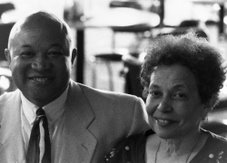
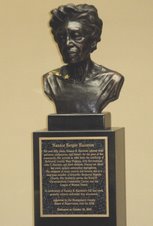
Madame Rose Brown


 Madame Rose Brown was an unknown legend in Columbus music until historian Doug Tracy sent me this column that appeared in 2008. She died one night in 1960, after appearing with Chickadee and Chickadoo at the New Frontiers Club.     

The Bright Rose of Bronzeville

By Eddie J. Colston,
The Ohio Sentinel, March 29, 1958 edition


Name any great Columbus entertainer in the past decade and the name Madam Rose Brown will ring a bell. Years ago, Madam was the town’s top performer. Today she still has firm hold on her star studded crown by singing and swinging in the area’s night clubs and plush cocktail lounges.
The young clique will remember Madam more vividly from her weekly TV show a few years ago over WTVN-TV for a segment of “The Rose Brown Show” was devoted to introducing fresh talent.

Born in Savanah, Georgia, Rose Brown came to Columbus to visit relatives. Out on the town one night she did several guest numbers at a couple of popular night haunts. With soulful blues, sexy torch songs and energetic swing style, she had the town’s nightlifers in the palm of her hand. Since then, this has been Rose Brown’s town.

Wasn’t so long ago that Rose rose (and I’m not tongue tied) to the pinnacle of Broadway success, when she costarred with the late Bill Robinson as Katisha in Mike Todd’s “The Hot Mikado.”Her Broadway appearance was in a featured role in “My Dear Public,” starring Willie Howard and a long list of today’s top stars.

Rose has added other musical triumphs and flattering press notices to her scrapbook with top billings with The Page Cavanaugh Trio. Louis Jordan’s Band, the Page One Ball, sponsored annually by the Columbus Chapter of the American Newspaper Guild and many others.

Norman Nadel, Columbus Citizen’s celebrated theatrical editor and big voice in show business recently penned a lengthy feature on Rose Brown. Nadel said, “I thought of shows I’d seen, singers I heard in Manhattan nightspots where the cover charge would buy food for a family of six. Once in a blue moon you might hear a singer like Rose. People from Columbus go to those New York clubs when they travel east. They could do as well or better, listening to this handsome dark-skinned woman singing in a little club on High Street.”

Another thrill for Rose was her invitation to audition for the role of Bloody Mary in the original “South Pacific” cast. “Rogers and Hammerstein brought me to New York,” she recalled happily, “and I sang the part for them. But when I saw Juanita Hall do it, I told them to go ahead and pick her, because she was perfect for the part. But I would have loved it.”

Currently, Rose is slated to make a series of films or live appearances on WTVN-TV doing Negro spirituals.

Sunday, August 15, 2010

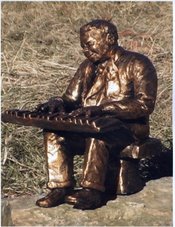
Sammy Stewart's Orchestra, 1913-33


Jazz musicians, writers and critics are almost universal in turning a sour face when the mention of a society bend or sweet music is made. Sweet music never fails to awaken visions of the syrupy, vibrato sounds of Guy Lombardo’s Royal Canadians or of the Paul Whiteman Band. Whereas the lean, muscular, aggressive syncopation of King Oliver’s Creole Jazz Band, Louis Armstrong's Hot Five, the Duke Ellington Orchestra, Count Basie or Bennie Goodman was hotter, thus preferable to jazz snobs.

But in the 1920s, there was a Columbus Ohio's society orchestra, led by pianist Sammy Stewart, that became the leading band in the music centers Chicago and New York throughout the decade. Stewart's bands catered to more generalized audiences such as hotels, ballrooms, stage shows, supper clubs, movie houses and more often, they performed in a non-jazz set thing.

Sammy Stewart was born in Circleville, Ohio, in 1891 and spent most of his early life living on Columbus's Mount Vernon Avenue. He was raised by his mother to be a respectful boy, went to Garfield school, graduated from Columbus East High School and was regarded as an outstanding pianist. Local booking agent and violinist Charlie Parker apprenticed young Stewart and allowed him to become a member of Parker's Popular Players. The orchestra performed in many of the area's prestigious hotels, the Deshler Wallick, the Kaiserhoff and in the the Secore in Toledo, Ohio.

Soon Sammy was to carry away many of his sidekicks from the Parker band to start another unit in 1918. Three years after he started the Sammy Stewart orchestra, Sammy contracted for a year at the Secore. The band's most important break came in 1922 when Sammy closed a lucrative deal with the exclusive Ritz, a supper Club in Detroit Michigan.

“When you contracted a job in those days it wasn't for a week, it was for year,” remembers Bill Stewart, not related to Sammy, but a saxophonist mainstay of the band. The rich contract was big enough financially to attract other colleagues from the Parker orchestra. At this time the Stewart orchestra include Paul Jordan, violin, Renna “Fats”, Robbins, trumpet, bassoon, his brother Millard Robbins, bass, flute, vocals, Frank Fowler, sax, Lawrence “Dick” Dixon, guitar, cello, Mance Worley, trombone, Harley Washington, sax, clarinet Claudius Forney, trumpet and cello

The Ritz engagements solidified the band and their fame was spreading. “Sammy only chose the best musician available,” says Roy Butler, who later joined the band at their opening in Chicago. “He had the respect of his men, who were chosen for their character in the first place and therefore, no disciplinary action was ever necessary.” According to Bill Stewart, who also joined the band in Chicago, “Sammy's contracts were so good that he could hire who he wanted and he preferred musicians from Ohio.”

The 1923 opening of Sammy Stewart and his Ten Knights of Syncopation at Chicago's Entertainer's Cafe was a sensation. For several months, long lines appeared at the doors of 35th Street to hear this great band from Columbus, Ohio. “We the first Negro organized orchestra playing special arrangements to hit Chicago,” says Roy Butler. “We were not known for playing hot or jazz music, but more on the sweet or semi-classical style, with which Paul Whiteman later made headlines. Bill Stewart relates, “We did all kinds of overtures, the William Tell included. We're the first negro orchestra to play Gershwin’s Rhapsody in Blue in its entirety. On one occasion, we auditioned and got a contract because of that and built a stage show around it.”

The entertainer's cafe job ended prematurely when the federal government, resulting from an investigation by Elliot Ness’ Untouchables, padlocked the club for prohibition violations; they serve drinks and teacups. However blessings were disguised as Sammy then negotiated with Joe Glaser, famed booking agent and later manager for Louis Armstrong, to open at the Sunset Cafe. The Sunset was another famous black and tan, located at 35th and Calumet in Chicago and the Sammy Stewart Orchestra, at its peak, enjoyed great popularity and success for several years surrounding 1924-25.

Bill Stewart remembers, “While we were at the Sunset all the musicians used to come over and see us. Jelly Roll Morton used to peek in from behind the backdrop and when we did a tune that didn't need an arrangement, we let Jelly sit in. King Oliver and his crew were down the street at the Lincoln Garden and we'd all run back and forth between shows to see each other.

The Sammy Stewart Sunset Orchestra included were Worley, the Robbins Brothers, Jordan, Dixon, Dave Smallwood, drums, Klein Tindall, piano Earl Moss, Bill Stewart and Roy Butler on Reed's. There came the need for a hot trumpet and a young, fat trumpeter who had just given notice to King Oliver’s band came to the Sunset and asked about the job, but Sammy barely turned his head and told him, “No, I don't need anybody.”

Bill Stewart says, “This is probably were Sammy missed the boat. He reasons that Louis Armstrong couldn't play the music which the orchestra was featuring and if he did use him, he would have to revise the band, building the it around Louis. It would have been a wise move had Sammy realize Louis’ potential., but Sammy was stubborn as hell, like to have things his way and didn't want to end up working for the great Satchmo, which would've been the case.”

Later in a biography by Max Jones and Paul Chilton, Armstrong's reflections on the audition were, “I wasn’t dicty enough regardless of how I played. I wasn't up to his society. . . ,” although Bill Stewart does not lend any credence to the social status implications.

“King Oliver’s gang used to go down to the record shops and play the records of the tunes that they wanted to use. They’d hum the songs over and over,until they get them into their heads. It was comical. But if you set music down in front of them, they be lost. They had a great pianist, Louis Russell, who’d write some tremendous arrangement and the have to bring it over to us to hear what it sounded like. But those cats were artists when they were blowing.” Eugene Hutt was a hot trumpeter, a good musician and he got the Sunset job with Stewart.

In March of 1926, the orchestra moved to the Metropolitan Theater and they played background for movies and intermission concerts. Klein Tindall left the band to return to Columbus to join Tom Howard's Whispering Orchestra of Gold, another of Columbus's great society bands, who became the center of a popular controversy in the 1920's. Dates in the publications at hand differ widely from 1921 through 1926, but the six man Whispering Orchestra was allegedly lured to a job by “crackers” from hotel that they were residing at in Miami, Florida, beaten, robbed and Tindall supposedly died a month later from his injuries. It is of little debate whether the bitter incident did occur, but the report of Tindall’s death seem to be inaccurate as he has been recalled playing with other orchestras as late as 1928.

The cliche, “when you're at the top there is only one way to go,” has to fit Sammy Stewart in the late 1920's. Sammy was getting older and the ever changing scene was looking for a fresh face.The Regal Theater was organizing an orchestra under Dave Peyton, and his contract offers to Lawrence Dixon and the Robbins brothers were accepted. Sammy worked a few small contracts, then he received an attractive offer to return to Columbus and open the new Ogden Theater on Thanksgiving Day, 1928. The homecoming continued to May of 1929, when they switched to the Black Cat Club on the far Eastside of Columbus. The Black Cat Orchestra, which had regular broadcasts on the Columbia System, included Bill Stewart, Kevin Stewart, Ed Carey, George Dixon, Frank Fowler, Leon Scott, Paul Tyler and Mance Worley.

The dedication of his band members became a nagging question to Sammy, being a careful leader, dedicated to his own formal of perfection. But he hung on with the anticipation of a journey to New York. Before leaving Columbus, the band filled a tenor sax position by calling on a young West Virginian named Leon Berry.

According to Bill Stewart, “We used to go to the movies to get ideas from the music and one of the characters that we had seen about that time was a Chinaman named to Chu Chin Chow. When we picked up Leon downtown at the bus station, he was wearing a purple beanie and long chin whiskers; he was a freshman pledge at West Virginia State College. I was so surprised at his appearance that I laughed, “Hey, look here! It's Chu Chin Chow! Somewhere down the line the Chen Chow dropped off, and everyone continue to call him Chu. “Chu” Berry eventually gained international recognition as a soloist with the Cab Calloway Orchestra.

A new look and the new sound was building with the additions of Berry and drummer Sidney Catlett and alternate stays at the Savoy and Arcadia Ballrooms in New York kept the Sammy Stewart Orchestra at the top of the heap. “At the Savoy, all the big named musicians with line the walls hoping to play with us,” says Bill Stewart. The tenor sax players would desperately try to shoot down Chu, but to no avail, because he'd blow them all away.”

But New York insisted on being a tougher nut to crack. American Federation of Musicians Local. 802 would issue a six month travel permit to visiting bands and when it expired Stewart was forced to replace fifty percent of his band with Local 802 members. This was further damaging to the nucleus of pride he insisted on from his personnel. And some of the veterans of the band remember that during this time, Sammy’s drinking problems began to arise. But the new band, which gained Eric Brown, alto sax, Kenneth Roane, trumpet Eugene Anderson, piano, Ikey Robinson, guitar and trombones star, Big Green, stayed in the bright lights of Broadway for nearly two years surrounding 1930.

After losing Berry and Catlitt, the band moved from New York's Lafayette Theater to the Pearl Theater in Philadelphia, to the Sunset Cafe in Chicago and back to the Lafayette in New York. But the Sammy Stewart Orchestra was about to come apart due to the pressures of the depression and changing musical tastes. The last stand was the Quoge Inn in Quoge, Long Island, New York in 1933.

Sammy became a piano soloist in high class clubs around New York. His violinist friend from the Charlie Parker days, Earl Hood, says, “He licked his drinking problem and he was once again at an unusually great pianist. He enjoyed being a single act because it gave him an outlet to play anything that he wanted to play. He was the first man I ever saw who could play two melodies simultaneously; one in one hand and another in the other.” Sammy Stewart eventually retired to teaching piano and organ in 1950 and his death came in New York, August 5th, 1960.

Aside from an orchestra photo in the the Pictorial History of Jazz, the band lapsed into the obscurity of the few participant memoirs. The surviving players met from time to time and in 1971 and Australian jazz writer, Ralph Gulliver started in long-distance inquiry. With a letter to this Columbus Citizen-Journal, he was able to find a few local people who remembered the Stewart saga. Further communications with Bill Stewart, Ray McFayden, Mrs. Charlotte Meadows, Lawrence Dixon Jr., George F. Mosel, John H. Baker, Ken Hutsizer and Roy Butler in Chicago, helped Gulliver put together a feature for Storyville, a British jazz collector’s publication. Sammy Stewart and his Orchestra: The Band from Columbus appeared in August, 1973 and Bill Stewart says he started receiving letters from all over the world.

Sammy Stewart will not compared with Satchmo, Duke, Count or the King of Swing, but his reputation and unique musical styles where individual approaches of the highest order.

Monday, March 15, 2010

The Soul Superbs, 1973


I had been rehearsing with Link (Bob Davis) and the Mod Squad, a rhythm and blues band in 1972 and one of the folks rehearsing was Ernest “Pepper” Reed. Ernest was seventeen, an earlier graduate of Columbus Mohawk High School and a guitar phenomonen, playing with Rusty Bryant’s Band at aged fifteen.

Pepper was rehearsing with a couple of bands and he suggested that I make a rehearsal with a South Columbus Band, The Soul Superbs. The band’s personnel was Chris Powell, sax, Anthony Ludaway, drums, Frankie Justice, vocals, Larry Ferris, bass, Bobby Payton and Pepper on guitar.

I rehearsed with them a couple of times early in June and the next weekend they were going out of town to do a week in Rock Island, Illinois at Woody’s Magic Room. They asked me to join them and I did. I fronted the money for a trailer rental and we were off in two vehicles.

It was quite a long drive to Rock Island, one of the Quad Cities and home of the legendary Rock Island Line (Get your ticket at the station for the Rock Island Line). We made it with no problem and played six days at Woody’s Place. Woody was the Black entreprenuer of Rock Island; he owned the night club, the rib joint and the liquor store. We played six nights, ate well and were paid decently.

We had a booking agent in Beloit, Wisconsin and from Rock Island, we went to Grand Rapids, Michigan to work at The Golden Glow. The club owner, who name escapes me, had a nice club and a house that he rented to the band for the week’s stay for one hundred twenty-five dollars. We played and went to a nice home, where everyone had their own bedroom. I can remember good Mexican food and a waitress whom I was fond of, Lori Smith.

From Grand Rapids, we went to a club in Battle Creek, Michigan, The El Dorado, where we played one night. I remember a party after the club, because the girI who was chasing invited me into the bathroom and it was the first and only time that I shot up heroin. I was the first one to get the needle, she put it in my arm, then drew it back out, then shot me back up. I wasn’t effected.

That incident reminds me of the first time that I was introduced to cocaine, on a music trip to Galesburg, Illinois, by a lesbian woman, or as Black folks say “a Bulldagger.” We were in the front seat of our new Dodge van between sets and the “nose candy” came out, I snorted, snorted again and returned it to the sister. I couldn’t feel anything. I only indulged one other time and wrote cocaine off as a bad luck drug that did do anything for me.

I got along well with everyone in the Soul Superbs except the bassist, Larry Ferris, who was a jerk and liked to mess with people. Anthony Ludaway and Chris Powell were co-leaders of the band and we had one recording session during my year with the band. We recorded Just Ask Me and Cannibals and I have been told that the disc is a collectors item on Ebay.com.

Eventually we became managed by Kenny Keels, of Columbus, and he booked The Soul Superbs in Bluefield, West Virginia at a club. We tried to get there in one day from Beloit and if it wasn’t for fog on the West Virginia Turnpike, we would have made it. We played in White Sulphur, West Virginia at Haynesworth’s Hotel and the Federal Reformatory for Women in Alderson, where singer Billie Holiday had been incarcerated years earlier.

In January, 1974, I played my last weekend at Haynesworth’s and bid farewell to the Soul Superbs. We had made money the first few times that we went out together, but subsequent trips were unproductive, breaking even or losing on the trips.

The Soul Superbs packed up for California just after I left, changed their name to Nitro, secured an agent named Dick Griffey, got signed to a contract by Motown Records and produced two albums. Ernest “Pepper” Reed went into the studio with a group, Shalamar, and produce a guitar line on A Night to Remember that is legendary.

I saw Ernest a few times later. He was a shadow of the lively guy I had known in the early 1970s. He succumbed to kidney problems in the 1990s.

Saturday, September 5, 2009

Ray Starrett, 1917-2009


On September 5, 2009 Ray Starrett passed on from his labor to his reward. In his ninety-two years he outlived his wife Ruth by ten years and married his college sweetheart, Helen.

Ray and I were related because he was my first instrumental music teacher, starting to teach at Jonathan Alder High School and the Plain City Schools in the fall of 1960. I was an enthusiastic ten year old, who had gotten a head start on training by playing bugle the previous summer. Mr. Starrett was glad to have a good student among his fifth graders.

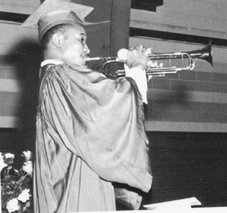
By the time I got into my second year in high school, I had moved into first chair of the trumpet section. We played so many different things in school; show tunes, concertos, marches, dixieland jazz. Under Mr. Starrett’s guidance I absorbed everything musical.

During my senior year I borrowed his Bach Stradivarius trumpet to play the Trumpeter’s Lullaby. I had lost my horn and he trusted me to use his.

We renewed our friendship in 1988 when I was invited to perform at Jonathan Alder. I was glad to show him the Severinsen-Akright Bel Canto trumpet that I had recently purchased; my first good horn since the Bach Stradivarius.

We remained friends through thick and thin, calling each other several times during each year. In 2007 I spend a couple of days with him at his vacation home in Florida, where we went to the movies and went shopping for flowers. That summer he celebrated his ninetieth birthday with his family.

Prompted by a call from his family I went by the house in July, 2009. He was weak but still able to to converse with me. We told each other that we loved each other. I called in August, expecting to hear that he had passed, and he answered the phone.

I loved Ray Starrett with all my heart. He was a good man and he was proud of me.

Wednesday, November 5, 2008

Wednesday, November 5, 2008, America's New Day Dawns


Peeps,

This is a personal letter to me from a friend in Lawrence, Georgia, and my response. There's gonna' be a lot of activity in cyberspace today; thanks to Al Gore for his invention.

A

Hey Good Lookin'

I am not a Democrat, but I am proud to be a part of this history. It is 11:00 p.m. on election night and the news has just predicted your man as our president elect. I remember the riots and the marches when I was a kid. I remember Martin Luther King's "I have a dream" speech. I remember meeting you in speech class and how "bad" that was that I fell in love with a "black man!" I still love that black man! I always will. It is much more acceptable today, but not really!

Our constitution gave us certain rights in this country that, until tonight, have not really been true.

I hate racism. I hate ignorance. I hate arrogance. I am proud to be alive to see an African American be elected our president. I'm not excited that he is a Democrat, but I am proud to be witness to this history.

God put ALL of us here on this earth!!!!!!!!!!!

Have a great party tonight!

Be Blessed~

E~


E,

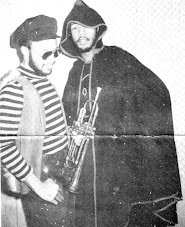
Cute picture of a good lookin' guy. Two good lookin' guys!

Sorry about politics, sorry about race, sorry about all the things that the things that we should be sorry about; mostly winning, losing and wars.

I have broken down twice today; the race is over and it time for the competitors to rest. I cry because their exhaustion is my exhaustion.

Before I think of myself as a Black man, I think of myself as a human. Before I think about being an American, I think about being a citizen of the world.

Maybe because my mother was an active republican and my father an active democrat, I am an active musician. We musicians are blessed to carry a love force that unites people of all ages, religions, colors, political persuasions.

My hope is that your grandchildren can see me play, witness other musicians and be inspired to devote their lives to the love force that brings people together in joy, to forget their troubles, sing, dance and clap hands. That's a legacy that, in my opinion, trumps being a famed sportsman, military or political hero.

I hope our new president is encouraged by us all, not to be a Black man, but a human, that leads and inspires our fellow citizens of the world that the good work that we do together makes our communities better. The strength of our unity, is superior to our partisanship.
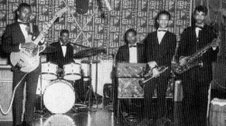
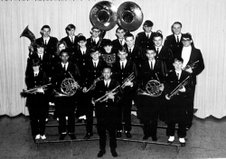
Sorry, that's the way us liberal, democrats think; love feels good, hate stinks, help your brothas' and sistahs', dance to the music, get lucky when you can, it's only money.

A

Monday, October 20, 2008

Friede Bennett, 1919-2008, The Color of Love


Elfriede Bennett, one of my moms and my biggest fan, passed on to her heavenly reward, Wednesday, October 15, 2008, sixty-one years to the day after she was married to Bob Bennett, a soldier and musician that she met in Germany. The story of their struggle to get married, The Color of Love, is a statement to strength of the union of their souls, as one for fifty-one years before Bob's death in September, 1998.

Friede approached me in 2004 to write her story. Here 'tis.

Little did I know when I went to work at the U.S. Army Air Base several miles from my hometown of Offenbach/Main on December 4, 1945, that my life was about become full of such joy, but at the cost of much heartache. As a stenographer/secretary to the base adjutant and base interpreter, I greeted a sergeant who was requesting to speak to the base commander. He came to report an ambulance accident that he was in while traveling with several officers off post and his limp and use of a cane gave away his injuries.

It was at the base dispensary that I saw the same sergeant the following day. Over the next few days, our paths crossed and our small talk began, with me revealing that I traveled by bicycle ten long miles each day to the job. He offered me some transportation in my direction and I accepted.

I was really happy to meet Bob Bennett, a well-spoken and charming Black American from Boston, Massachusetts, and we became very attached to each other. However, if there was a written taboo concerning associations with Black soldiers on an American base, I was totally unaware of it. In 1946, The U.S. Army was not quite at the end of its policy of segregating troops by skin color, except that the unit’s officers were White.

When Bob and I became noticeably a pair, my new job assignment became the kitchen, for cooking detail. The fall from the grace of secretary to cook was too much for me to handle, so I quit the base.

At the same time, Bob, was a part of the unit being reassigned to an air base in Southern Germany. Since a good friend was making the move with the unit also, Bob and I decided to get married and I would follow along to live in the town near the new base. Boy, did all hell break loose with that move!

Before our wedding occurred, the pregnancy did, and our plans to marry were met with a refusal from German authorities. The local mayor was getting his orders not to marry us from the base commander. Bob, my fiancé, was facing a dismissal from his unit and a return to the U.S. to face the music of race mixing, which was a clearly defined prohibition of American and Army culture.

Our son, Dwayne, was born on February 5, 1947. It would have normally been a day of unforgettable joy for most mothers in the world, however the base commander gave personal orders for me “not to bring the baby out in the street or I will send you back to Russia.” Since I’ve never been to Russia, I thought that was some pretty strong talk for a person who had no authority over a German citizen. But still, the commander was a vocal obstacle in the path to our marriage and our family.

The racist commander fabricated charges and allegations against Bob, but he defended himself against the threats of jail and transfer/deportment back to the States. Bob lost his court martial on trumped charges and was restricted to his quarters. The power mad commander was forcing me into action.

One of Bob’s friends was positioned to leak to me that he had seen transfer orders scheduled for the next day. I began walking to Erlangen, Germany, home to the Eighth Air Force Command and two days later, I arrived early to see if Colonel Martin would have an audience with a German civilian.

I was admitted to the colonel’s office and found that he was not only aware of the request that Sergeant Bennett had put in to marry a German, he was in agreement with the papers. He proved to be on our side by calling the base in Roth, talking with the commander and ordering Bob’s release from detention. He arranged transportation for me back to my home and child, following me to Roth the next day to investigate the whole terrible affair.

Bob wasn’t idle during these ugly days; he had written a letter to General Dwight Eisenhower, mailed it to his sister in Massachusetts and she forward the letter to a congressman. The power of my companion’s words must have compelled the general, because Eisenhower responded with not only an approval of the marriage request but a choice of dates for the ceremony. With his help, we chose October 15, 1947.

Base Commander Glass promptly transferred Sergeant Bennett to Rhein-Main and took a parting shot with an AWOL charge for lateness. Bob fought the AWOL battle and subsequent loss of his sergeants stripe, but we had won the war to liberate our rights to marry.

The marriage, by law, was by the Mayor of Roth, Germany, with close friends and my family at the Enlisted Men’s Club. The next day’s icy marriage proceedings by American officials freed us to escape back to Frankfurt, gladly fleeing the hideous restrictions of the U.S. Army hierarchy there in Roth. We encountered harassment from military police as we arrived at the train station, “No fraternization between Black soldiers and German Fraeuleins!” “Kiss off, boys. We got a license.” MPs were left in disbelief.

When your marriage is to someone from a country with a tradition of racial segregation, the problems are seemingly endless. Bob was due for a transfer Stateside a month after our marriage, but there were military regulations disallowing me and Dwayne to travel with him. I had to wait another month and during that time I found the two of us to be people without a country.

To German authorities, I was married to an American and no longer eligible for German food rations. But to the Americans, I was German, thus ineligible to shop at the Post Exchange or Commissary. Thank God, not for government officials but for friends who helped our survival.

Two week after Bob’s departure we finally were passengers on December 18, 1947, boarding the U.S. Army Troop Transport General Callan and heading towards the English Channel to pass the ‘White Cliffs of Dover.’ Us passengers watched sunshine on the cliffs and, truly, they shown white.

After the General Callan stopped for passengers in Dover, we set course for the Azores and just in time for christmas, the crew and passengers were greeted with the suddenness of a hot and heavy storm. We weathered the rough seas and sailed onwards to the United States of America.

If the seas weren’t rough enough, the hatred was from my fellow sailors, the military people. An officer order me off the upper deck with a threat that leaving my stateroom could cancel my disembarkation in New York. and blind hatred that we encountered. But time has healed and made me very grateful for our sizable family, which includes five children, five grandchildren and several great grandchildren. Our fruitful love, that has been undefeatable from that chance meeting in December, 1945, has multiplied Black soldiers, who had heard the grapevine news about the Bennett Family’s victory over injustice, came to Little Dwayne and my aide with clean clothes and I was allowed out of the stateroom but to go get food for the two of us.

How excited everyone was to see the Statue of Liberty coming into view on the port side of the troop ship; welcoming us in the bright sunshine with her book and right hand extended. To this day, it was a sight never to be forgotten; a proud lady saying “Welcome, all of you, to this great country.”

Of course, despite what the statue was declaring; restrictive military agents wouldn’t allow me to get help with my baggage and baby. But despite the formidable odds and obstacles to our resolve, we made it.

Bob picked us up at Fort Hamilton and took me to his sister’s in Massachusetts. But we couldn’t be too comfortable together for long because the Air Force had a transfer in assignment for him to Salinas, Kansas. And that transfer didn’t include his young family, so he quickly lobbied to transfer to a post that would accept families.

No help came from the post’s chaplain, “I didn’t tell you to marry her!”, he blamed. With the help of a colonel in Boston and his connections in Washington, D.C., Bob’s transfer was to Lockbourne Airbase in Columbus, OH. We arrived in early 1948 and by early 1949, Sergeant Bennett became a civilian, along with his family.

Race problems awaited us in civilian life; I lost a job when I was spotted by fellow workers being dropped off in front of the office by my husband. But he WAS my husband and that WAS what husbands do for working wives. The loss of a job wasn’t something that I couldn’t take; my husband was a great man, whatever his skin tone.

Paper and written words about the experience of our time during those awfully struggling years can’t cover all of the indignities; emotional turmoil over nearly fifty-one years together.

We were able to retire, look back on our accomplishments, our happy family and enduring love. And how many couple think of General Eisenhower on their wedding anniversary day? Without his compassion and approving support of our marriage, what would have happened to our lives?

Of course, losing Bob to his illness in September of 1998, has triggered an unbearable shock that our great times together will not continue. What helps me, though, are all the good memories and all the love from our immediate family.

I just wish that our good life together could have gone on and on and on...


Rest in peace, Friede, with continuing love from your decendants.

Tuesday, October 7, 2008

Katie Smith, 2008 WNBA Championship MVP


I went to Logan, Ohio High School to do a concert in the spring of 1992 and my concert ended up being a celebration for the girl's basketball team's trip to the state finals, where they were a proud runner-up. I left Logan a part of Katie Smith's extended family.
I have followed my sistah through a trip with Ohio State to the NCAA finals in 1993, we celebrated two ABL championships with the Columbus Quest in 1997-98. I have sent her love with USA Basketball in Sidney, on crutches in Athens and victoriously in Beijing.
My Columbus brotha' Bill and I had tix for Monday, October 6, 2008, at The Palace in Auburn Hills, but instead, we replayed Sunday's match and wept in joy as our sistahs of the Detroit Shock swept game three of the 2008 WNBA Finals. Katie, your extended family in Central Ohio sends our love to you in this proud moment; we'll have hugs and kisses for you when you get back to North High Street.

The 2008 WNBA Season is over, my tears of joy are shed because now, my sistahs get a while to rest the aching bones, joints, tendons, ligaments, muscles and sleep in their own beds for a few weeks, before their journeys to make a living in sports continue with travel overseas. I love the game, every team and every player that participates in this sporting entertainment that gives such joy to our extended, women's basketball family.

I just wish our family was larger; that the tens millions of millions that worship Kobe, LeBron, Kevin, Tim and the NBA, would embrace the same passion that comes to the court with Candice Parker, Lisa Leslie, Katie, Deanna "Tweetie" Nolan, Beckie Hammond, Tamika Catchings and Diana Taurasi. But because our mighty WNBA Army remains small and it's mocked by small minds and overlooked by sports media.

I am a world traveled professional musician, a pilot, scuba diver and published author, but there is nothing more exciting in my life than women's basketball. The 2008 USA Basketball/WNBA season was the best; no ifs. ands or buts.

My personal MVP Award is shared by Katie, Ann Wauters and Taj McWilliams-Franklin; three mighty warriors.